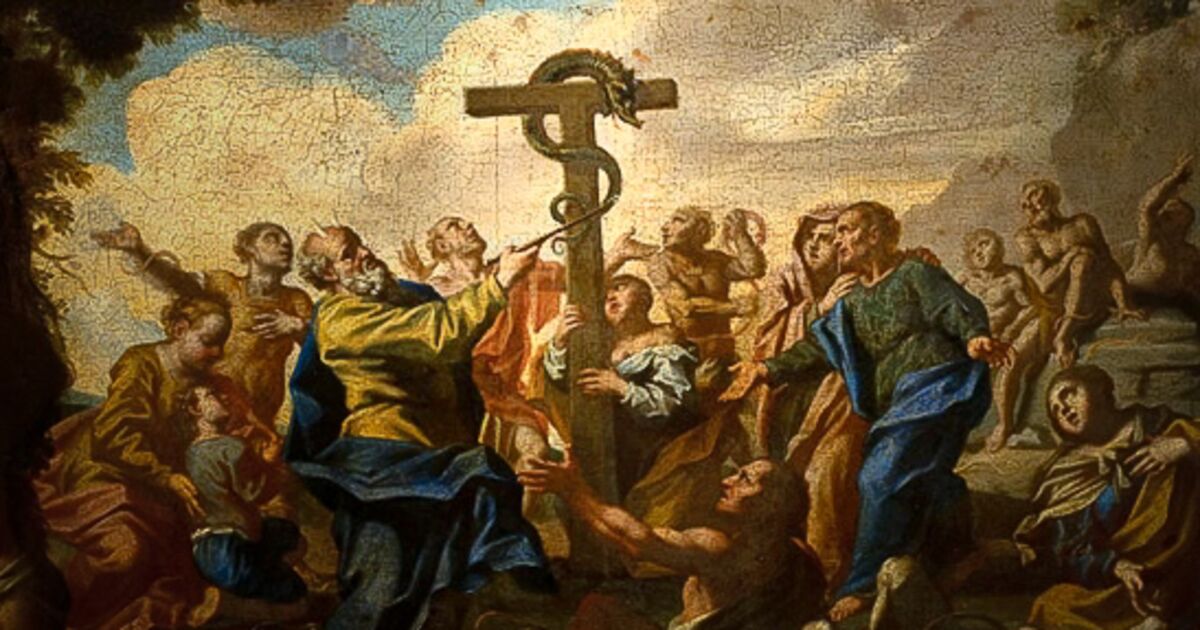
The biblical account of the saraph serpents in Numbers 21:4-9 has always unsettled me.
Sure, the people were complaining about Divinely-provided manna from heaven, but did such a complaint and insult really merit the deadly bite of a serpent?
Why would God let these terrible serpents bite His people, and why is the remedy for such a sting to look at bronze serpent hung on a pole?
It seems cruel to be told to look at an image of the thing that could potentially have killed you as the remedy to save you. . . . except that God is not cruel:
He is a tender Father, and a master poet.
From Adam and Eve, to the destruction of the temple and Babylonian captivity, God’s people have always been complainers, covenant-commandment-breakers, and wanderers in the desert.
Yet God does not give up on us.
In Jesus, God one-ups the foreshadowing of the saraph serpent on the pole.
When we were dying of the serpent’s bite of Original Sin, God, “who knew no sin, became sin to save us.”
He submitted to being hung on a cross, so that all who gaze upon Him might live; so that all who recoil from suffering in horror and those who consider pain a stumbling block in this vale of tears may instead discover the Cross is salvation.
God still provides his desert wanderers with Daily Bread, in a new covenant-commandment: you must eat the Divine Manna from Heaven or else you may die of the serpent’s bite.