SPIRITUALITY
& CHARISMS
“Praise the Lord by your very life.”
Our Holy Mother St. Clare


WHO WE ARE
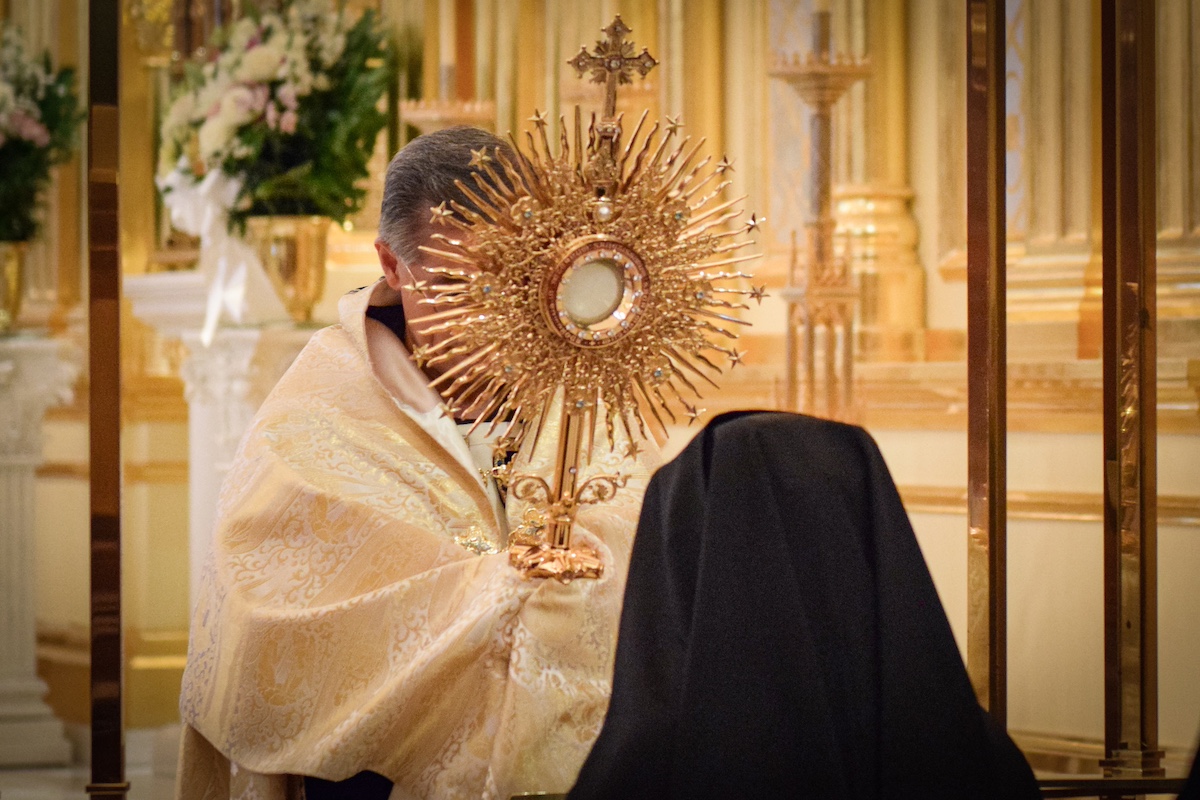
As Poor Clares of Perpetual Adoration we are called to pour out our life in thankful adoration for Jesus in the Most Blessed Sacrament on behalf of Holy Church, and with our sisters in community, we eagerly follow the Gospel way that our Father Saint Francis and our Mother Saint Clare showed us.
This Gospel life allows us to receive the gift of His Redemption and generously serve souls through our prayer and sacrifices within the hiddenness of the cloister.
"[Y]ou too may feel what friends feel
in tasting the hidden sweetness
that, from the beginning,
God Himself has reserved for His lovers."Our Holy Mother St. Clare, (3rd letter to her sisters)
THE GIFT OF OUR CHARISM
There are many charisms in the Church that bring glory to God and build up the Church. As Poor Clares of Perpetual Adoration, it is our task to offer reparative thanksgiving to Jesus in the Most Blessed Sacrament. The original inspiration, gifted to our founders, is linked to the Gospel account of the ten lepers and only one returning to give thanks to Christ for his miraculous healing. We desire to offer Our Lord in the Holy Eucharist a heart full of gratitude for His Abiding Presence with us and thank Him for those who neglect to remember the gift of His Eucharistic Love.
“You have taken hold of that incomparable treasure hidden in the field of the world and of the human heart.”
Our Holy Mother St. Clare
“We are on our way to eternal joy; and if we take these things he tells us seriously, if we take our vocation, if we take the mystery of the redemption very seriously, then we shall be full of joy.”
Mother Mary Francis, PCC
MY SOUL PROCLAIMS
THE GREATNESS OF THE LORD
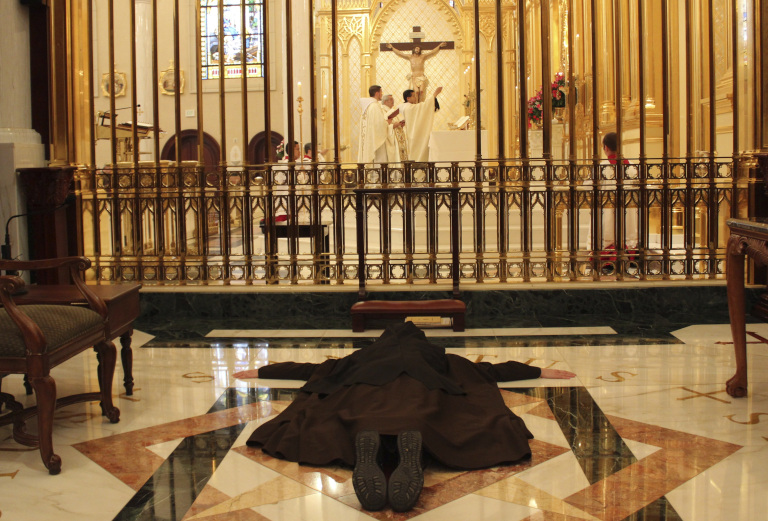
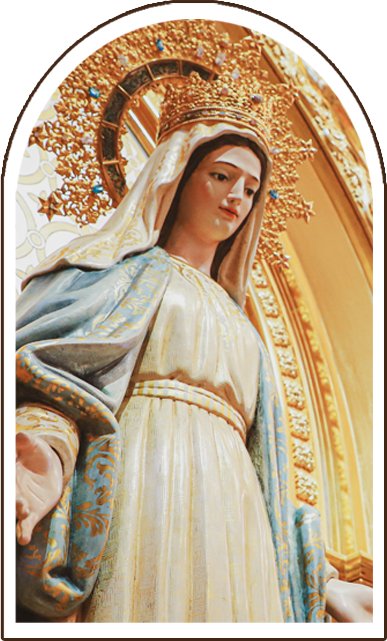
Our Lady models for us what it means to offer one’s life to the Plan of the Eternal Father, and to be vulnerable to the power of the Holy Spirit so as to become true adorers of our Eucharistic Jesus.
“You must believe in mercy to the point of believing that you are a joy for Jesus.…The life of the Christian is a life of love. Can people love one another without knowing that they are a joy for each other?”
Fr. Jean D’Elbee
THE GRACE TO PRAY ALWAYS
I rejoiced because they said to me,
“we will go up to the House of the LORD.”
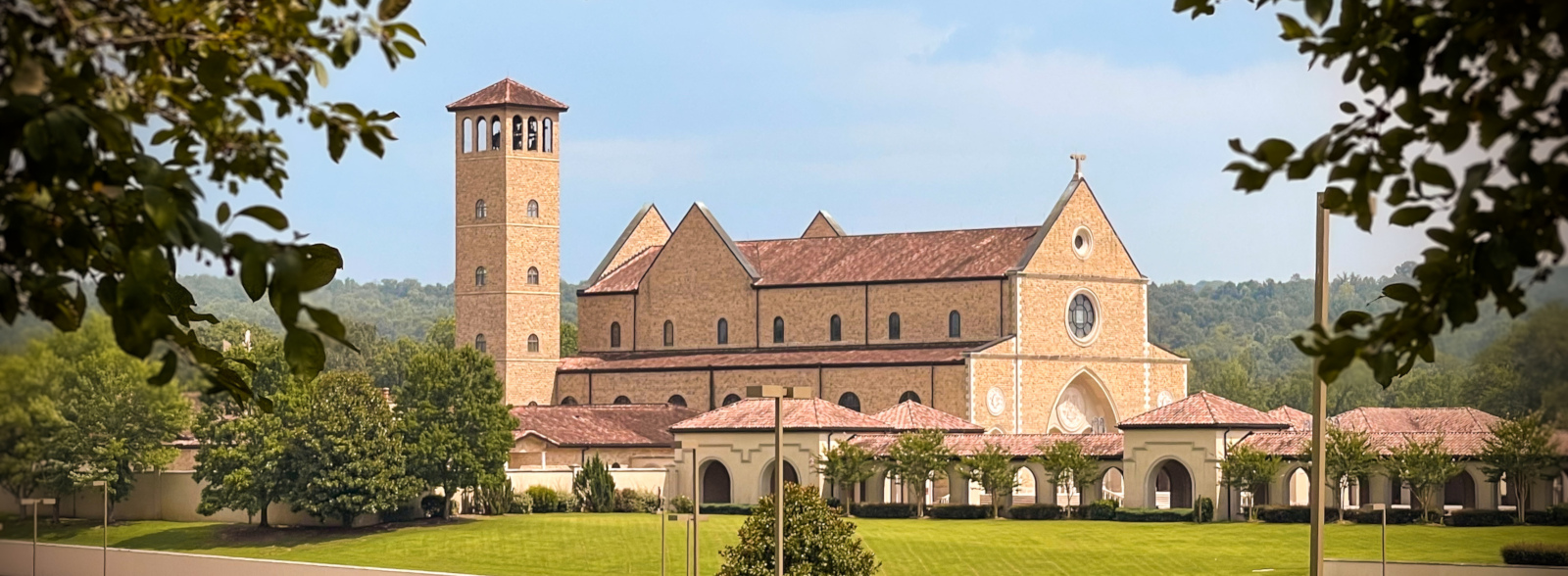
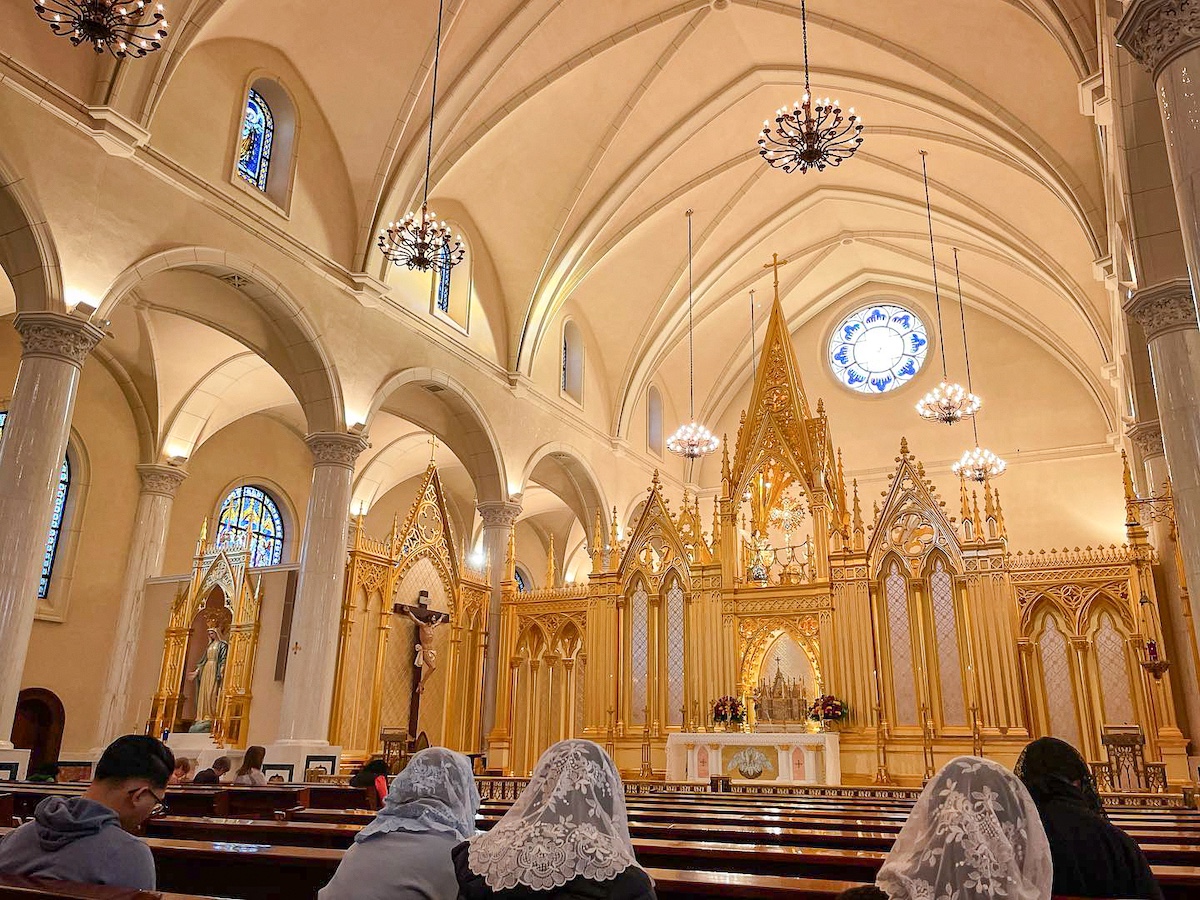
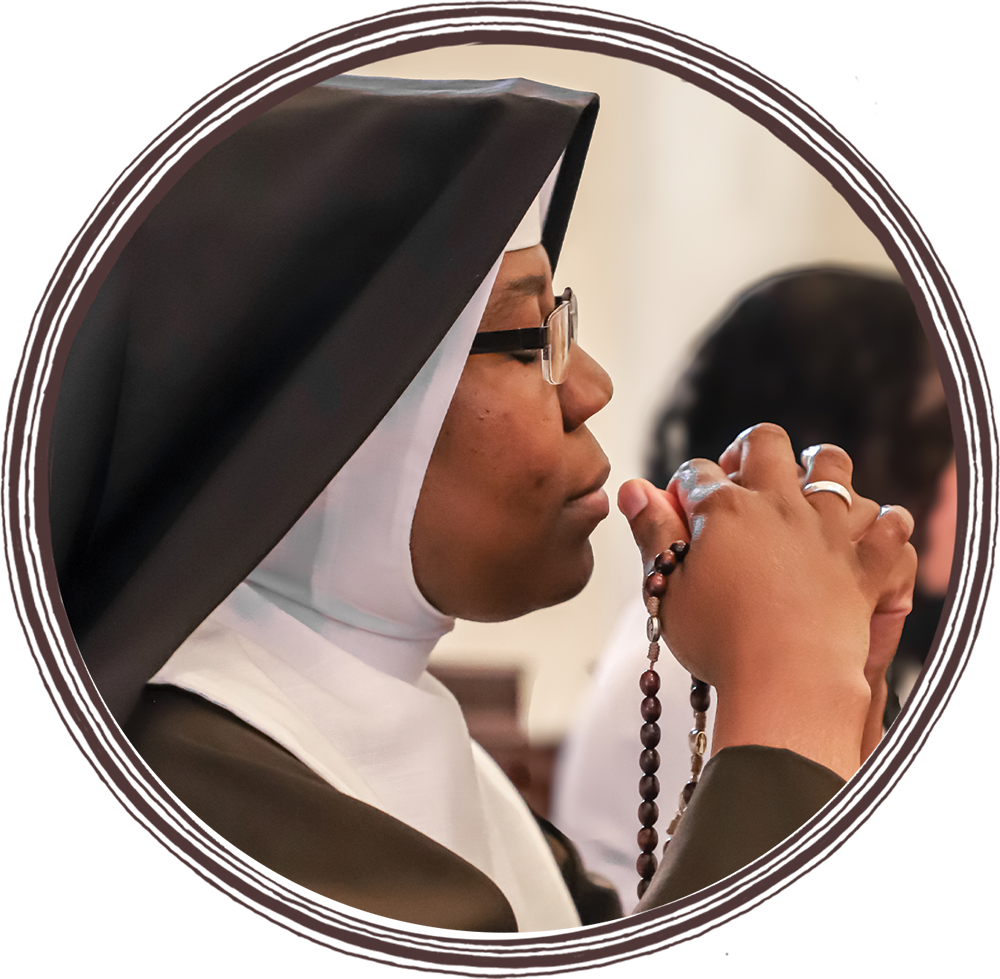
We are called by God to be with Him always in His House. Here at Our Lady of the Angels Monastery at the Shrine of the Most Blessed Sacrament, we share our liturgical life of praise and thanksgiving with pilgrims who come to visit us. Our life is centered on Jesus in the Holy Eucharist. Mass begins our daily offering with Jesus to the Father and our adoration continues this thankful praise throughout the day and night with the addition and privilege of praying the entire Divine Office for the People of God and especially for priests.
“You should not think that working all day can hinder being with God and acquiring all the virtues. The hand toils, the foot walks, the eye looks, the ear hears, the tongue speaks, the whole body feels. But…the heart can be loving God unceasingly and intensely.”
Bl. Maria Magdalena Martinengo
OUR EUCHARISTIC LIFE
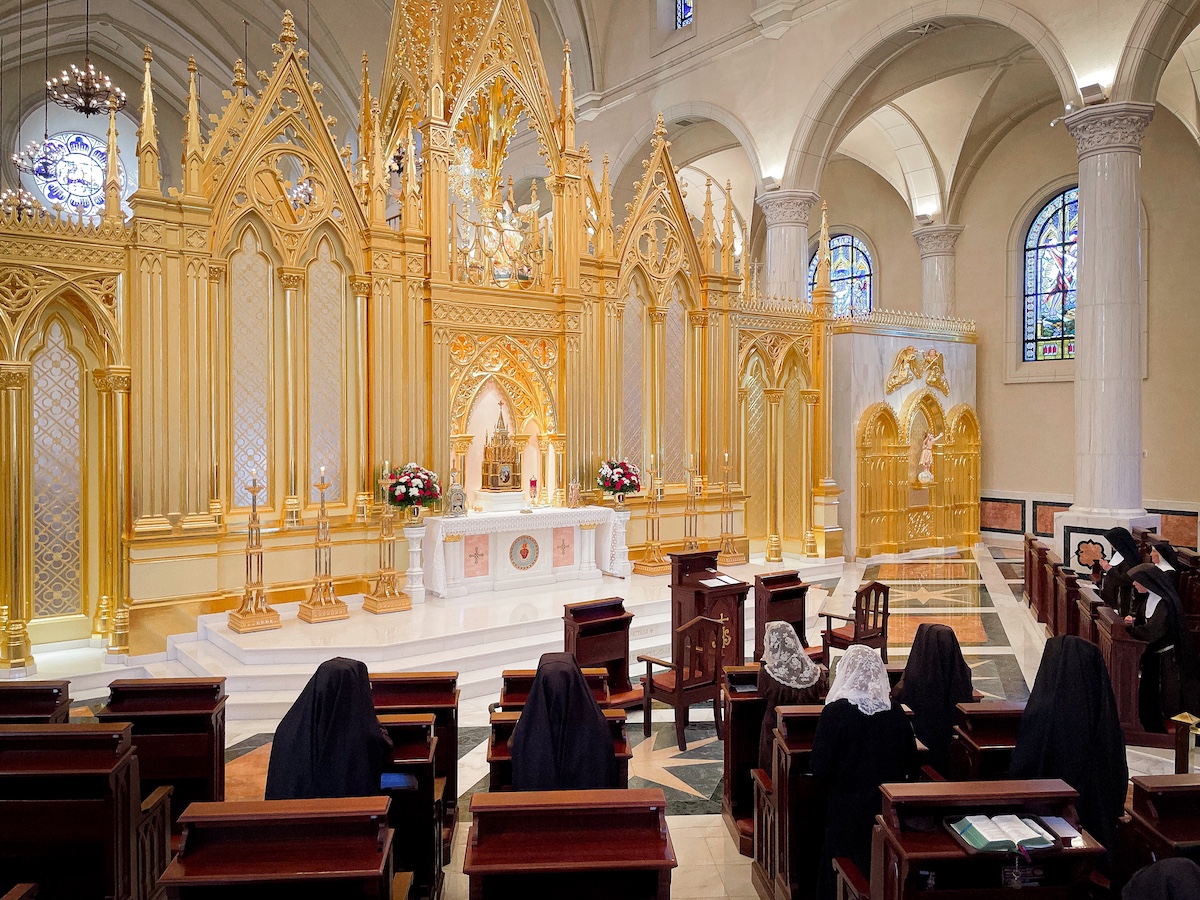
To return love for Love expresses our desire to dedicate the gift of ourselves in thankful adoration to Jesus in the Most Blessed Sacrament. Our Franciscan, Monastic, and hidden life, captures the sublime humility, profound silence, and veiled appearance of Our Glorious King in the Eucharist. We desire to witness to His Merciful Kindness of the Holy Eucharist. Our communion with each other and with the Body of Christ is important to us.
“Believing in the crucified Son means ‘seeing the Father’ [Jn. 14:9], means believing love is present in the world and that this love is more powerful than any kind of evil in which individuals, humanity, or the world are involved. Believing in this love means believing in mercy. For mercy is an indispensable dimension of love; it is as it were love’s second name…”
Pope St. John Paul II
LIFE OF PRAYER
“God is the life of the soul.”
St. Anthony of Padua
"Through prayer, especially the celebration of the liturgy, and their daily self-offering, they intercede for the whole people of God and unite themselves to Jesus Christ's thanksgiving to the Father (cf. 2 Cor 1:20; Eph 5:19-20)."
Verbi Sponsa, Instruction on the Contemplative Life and on the Enclosure of Nuns
"In reality Clare’s whole life was a Eucharist because, like Francis, from her cloister she raised up a continual 'thanksgiving' to God in her prayer, praise, supplication, intercession, weeping, offering and sacrifice. She accepted everything and offered it to the Father in union with the infinite 'thanks' of the only-begotten Son, the Child, the Crucified, the risen One, who lives at the right hand of the Father."
Pope St. John Paul II
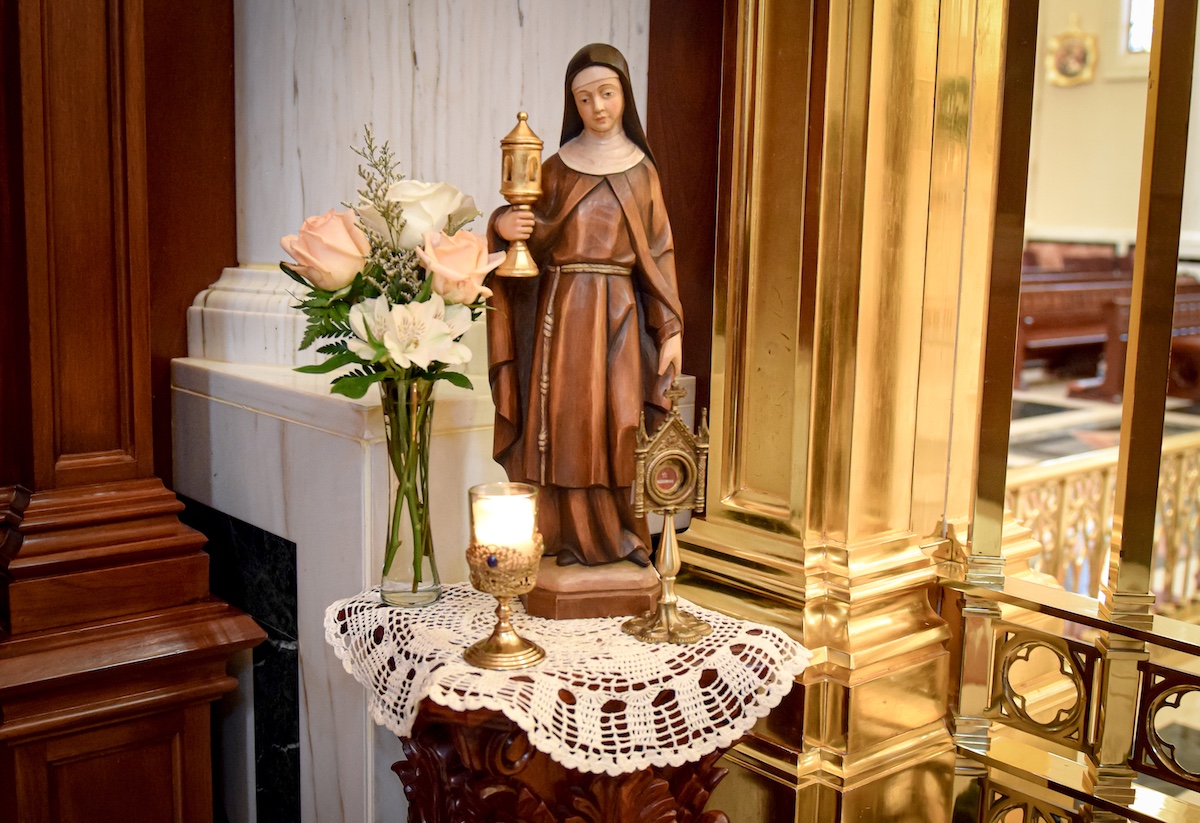
Happy, indeed, is she to whom it is given to share this sacred banquet, to cling with all her heart to Him whose beauty all the heavenly hosts admire unceasingly, whose love inflames our love, whose contemplation is our refreshment, whose graciousness is our joy.
Our Holy Mother St. Clare
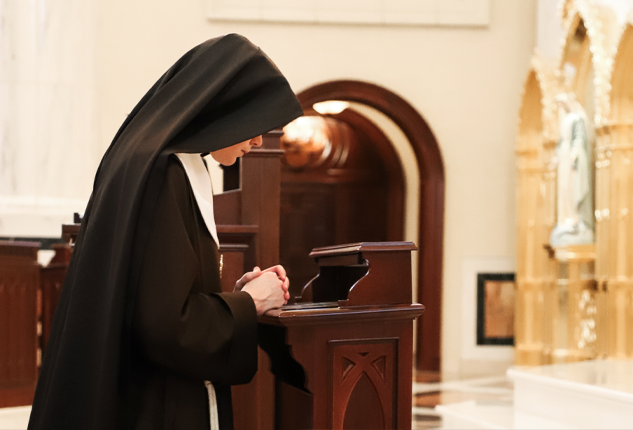
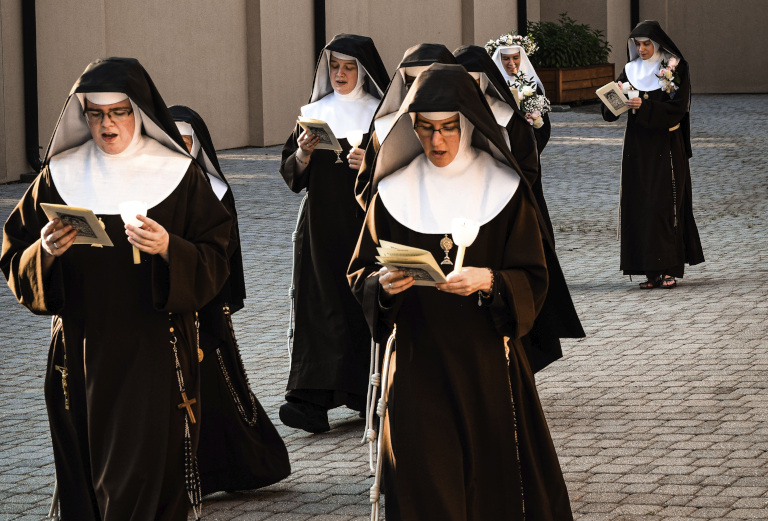
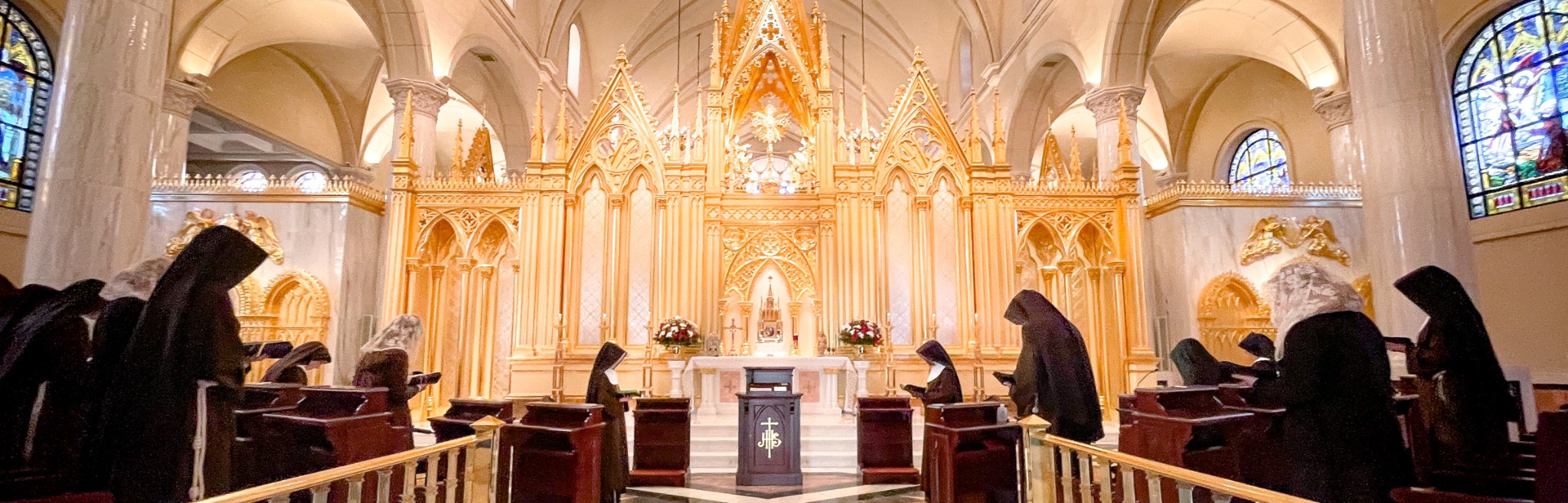
The PCPA is set apart to ‘be always with the Lord’ in His House (cf. Blessing of St. Clare). Called by Him to be His spouse, our life of prayer is centered on Jesus in the Holy Eucharist. Holy Mass draws us into the daily offering of ourselves with Jesus to the Father; the Divine Office and adoration vigils continue this thankful praise throughout the day.
As we drink deeply from the stream of Eucharistic Grace, our common life, work, times of solitude and recreation are permeated with the presence of the Lord ever with us. Ever so gradually as the Lord gives Himself to us and we give ourselves to Him in prayer, we receive a share in His Eucharistic Love for the Church, abiding more and more in Him. Sharing in the mysteries of Christ’s Life throughout the liturgical year, we seek to be led by the Holy Spirit to the fullness of union with Our Eucharistic Lord.
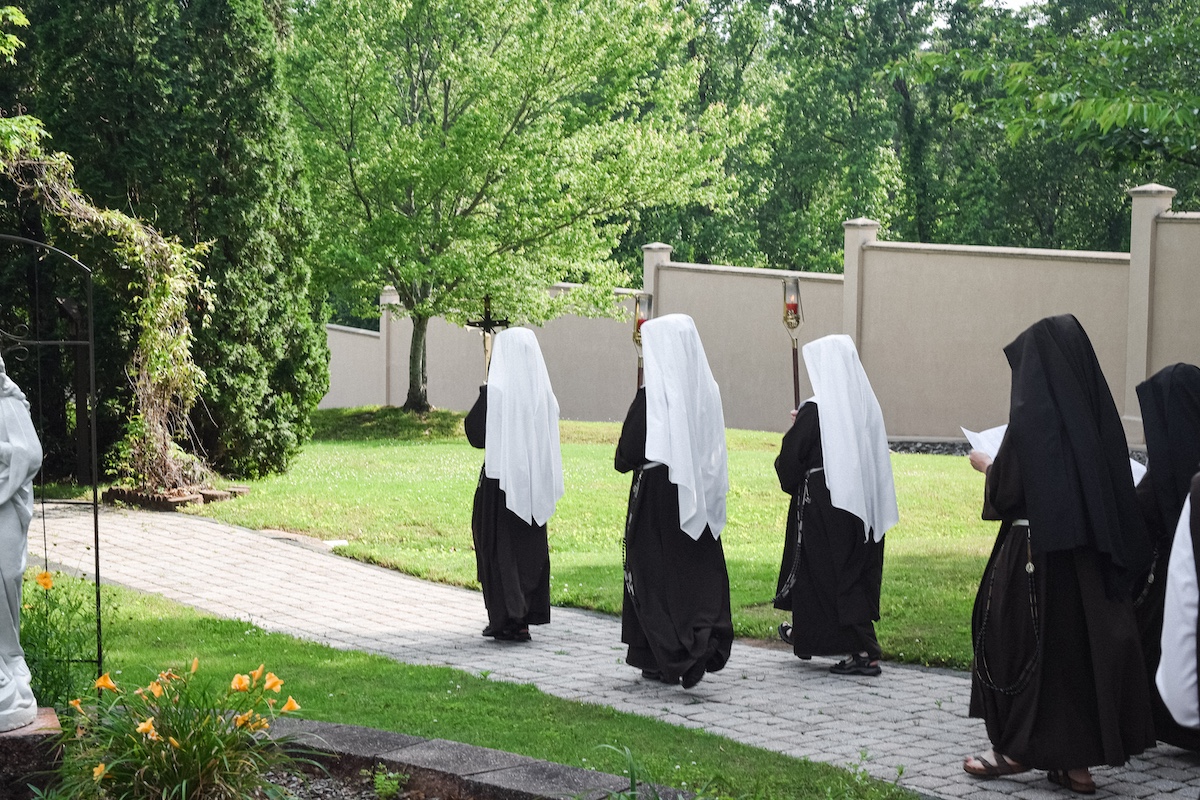
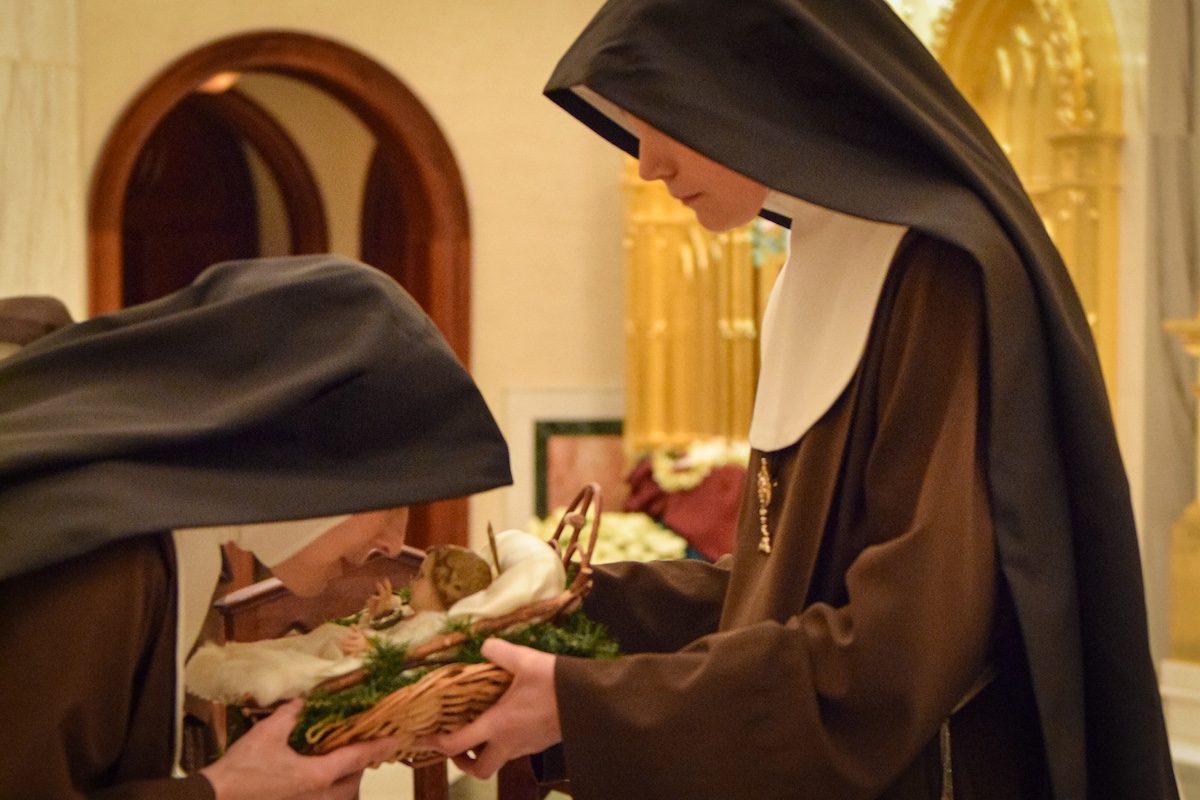
The Mass and Adoration
"Through adoration, the Christian mysteriously contributes to the radical transformation of the world and to the sowing of the Gospel. Anyone who prays to the Savior draws the whole world with him and raises it to God. Those who stand before the Lord are therefore fulfilling an eminent service. They are presenting to Christ all those who do not know him or are far from him: they keep watch in his presence on their behalf."
Pope St. John Paul II
"Let everyone be struck with fear, let the whole world tremble, and let the heavens exult when Christ, the Son of the living God, is present on the altar in the hands of a priest! O wonderful loftiness and stupendous dignity! O sublime humility! O humble sublimity! The Lord of the universe, God and the Son of God, so humbles Himself that for our salvation He hides Himself under an ordinary piece of bread! Brothers, look at the humility of God, and pour out your hearts before Him!"
St. Francis of Assisi
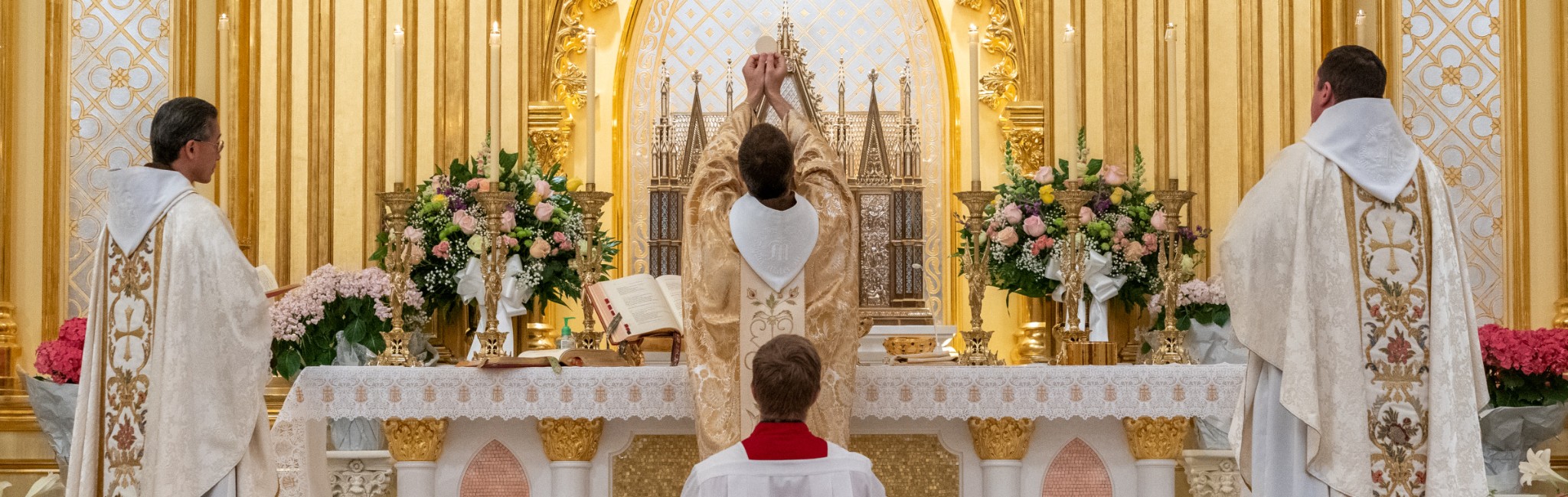
"We enter daily into the dying and rising of Jesus in the Eucharistic Sacrifice and are transformed by the power of Word and Sacrament. Holding back nothing from our offering, we give ourselves totally to Him Who gives Him-self totally to us. In the breaking and sharing of the Eucharistic Bread, we are brought into ever deeper communion with Christ and one another"
PCPA Constitutions, 95
If the Mass is the ‘source and summit’ of Christian life, it is also the soul of the life of the Franciscan Brother or Sister. Beginning the day with the Office and entering directly into the Celebration of the Holy Mass, we are fed by the Gospel, the very form of our life, and we receive the Lord in Holy Communion, the One who transforms us ‘into His image.’ As we adore Him, solemnly exposed in the Blessed Sacrament, throughout the day and night, Christ becomes our very life (cf. Philippians 2). Living so close to His Real Presence we seek to be permeated more and more with His self-emptying charity, poured out in the Mass and in His Silent Presence.
Adoration as a way of life enables one to intercede for the suffering, the heart broken and the desires of every heart since all are held in the Eucharistic Heart of Jesus. By keeping her vigil with Christ, the Poor Clare silently ‘holds up’ as it were, the One who draws all to Himself. There is nothing more important than this – and so these souls remain with Him that all may find salvation through communion with Our Savior.
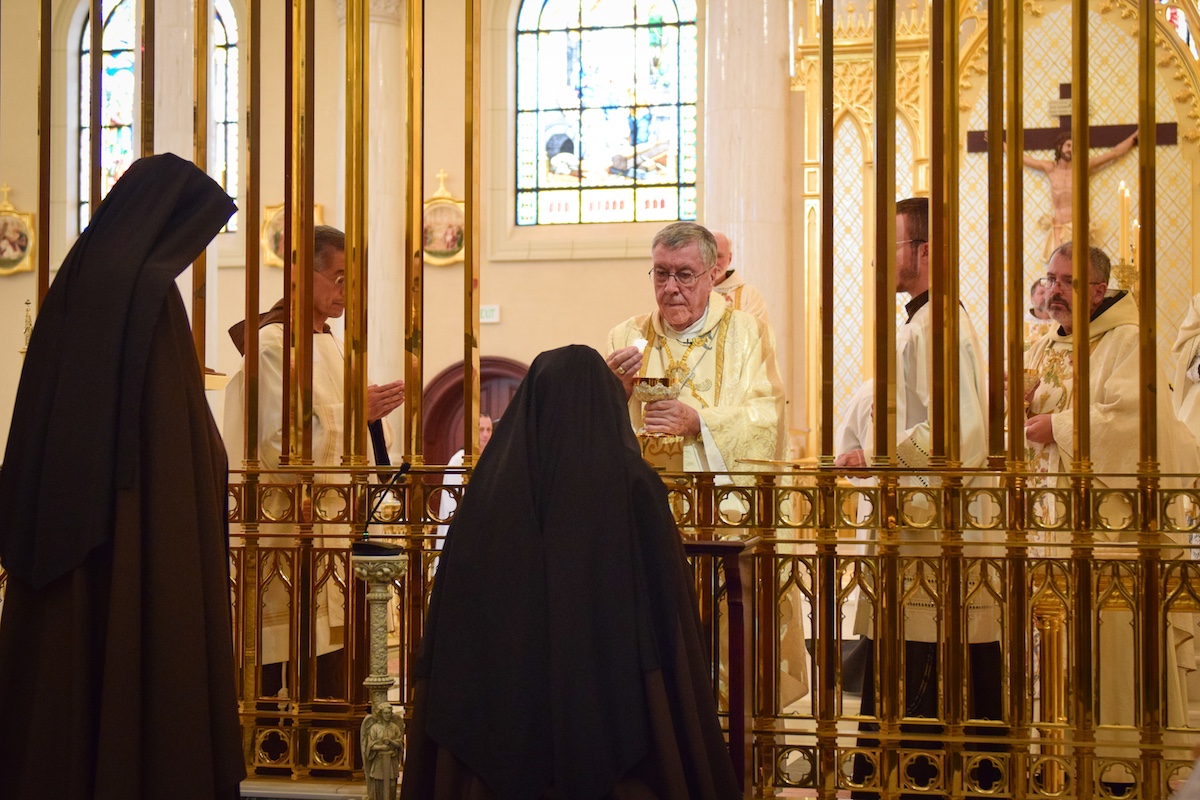
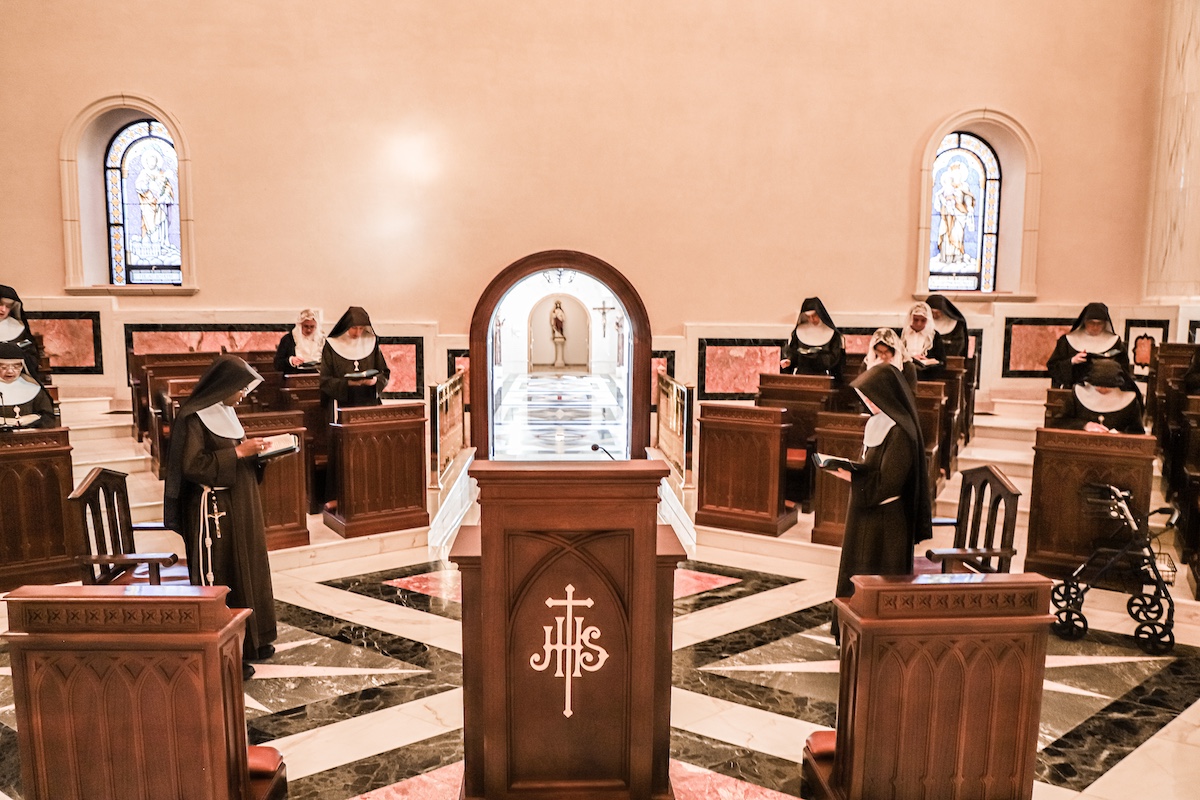
“[The Contemplative] path is not a sublime ascent to the heights of breathtaking views. Contemplation finds its home more in the gaze of a loving soul on the disfigured face of Jesus at Calvary, who asks if we can keep ourselves longer before His eyes.”
Fr. Donald Haggerty
The Liturgy of the Hours
"As those more especially dedicated to divine worship, it is our joy and privilege to celebrate the Liturgy which draws us into the hymn of praise and intercessory prayer that Christ and His Church continually raise to the Father. As we celebrate together the words and deeds of God, they become spirit and life for us, molding us into a true sisterhood and community of adoration."
PCPA Constitutions, 94
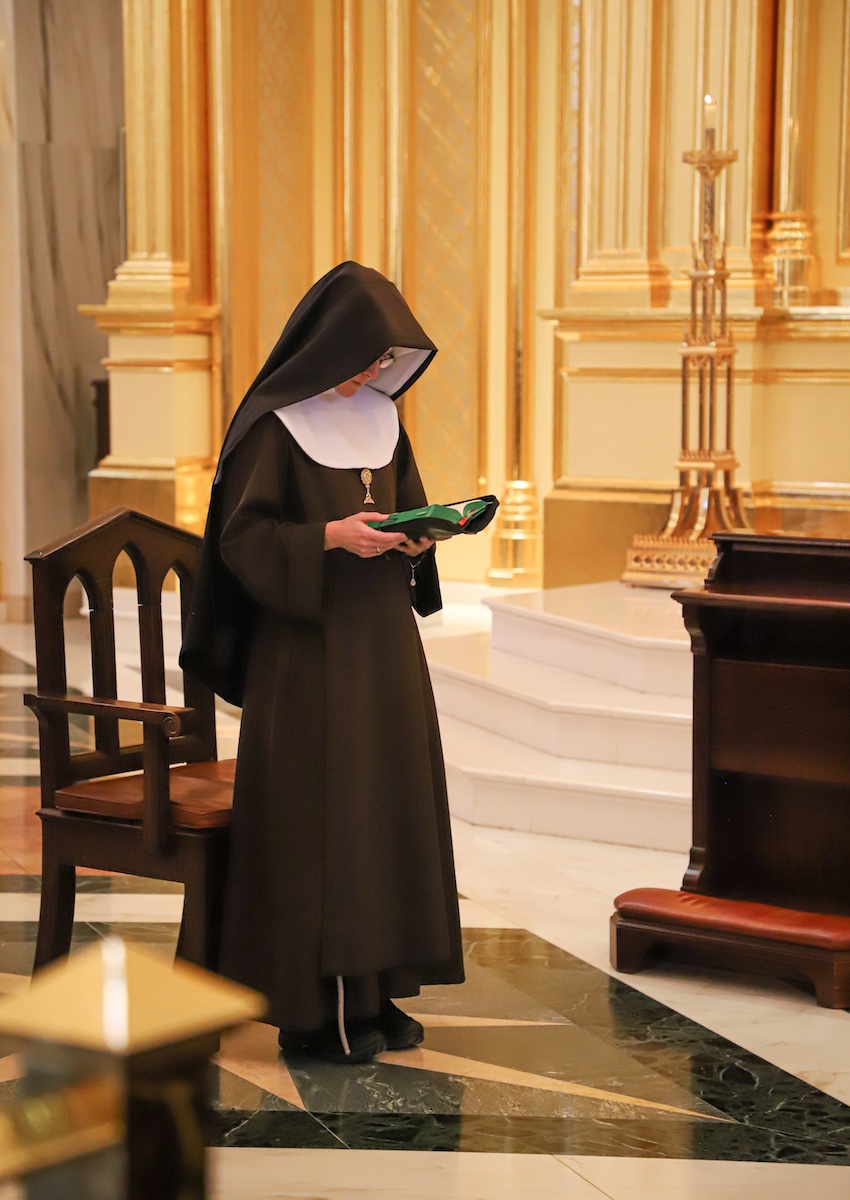
“What else does the breviary intend but to lead to the altar and to radiate from it and then to lead back to it again? Viewed thus, the recitation of the breviary is… a God-given charge. The redemptive act of the consecratio mundi [consecration of the world], reaching out from every Mass, is caught up, as it were, in the Divine Office and made to stream forth farther and farther…In the Divine Office Christ passes on to the members of His Mystical Body the strength of the Holy Sacrifice. In other words, Christ prays, and we take part in his prayer.”
Ludwig Munster
The PCPA is commissioned to pray the Divine Office on behalf of the Bride of Christ, the Church. With her Sisters, she joins in the praises of God with the hosts of heaven. She magnifies the Lord in His Own Inspired Words, and in her sacrifice of praise “labors for the salvation of souls in ways beyond our comprehension” (Bl. Columba Marmion). All of the Hours of the Office are prayed in common and open to the public. The Apostolic Constitution on the Divine Office states: “The Liturgy of the Hours is the means of sanctifying the day. By being immersed in the Church’s Liturgy in this way, we are joined with all of the mystical Body of Christ in praise and petition, in prayer with Christ and to Christ. The excellence of Christian prayer lies in this, that it shares in the very love of the only-begotten Son for the Father and in that prayer which the Son put into words in his earthly life and which still continues unceasingly in the name of the whole human race and for its salvation, throughout the universal Church and in all its members.”
Silence
"Our search for intimacy with God requires a silence that embraces our whole being. We value an atmosphere of silence that fosters the inner stillness in which we are able to hear the Lord speaking always and everywhere, in every one and everything. We also cherish times of solitude when we can be alone with Him and rest in His Presence."
PCPA Constitutions, 107

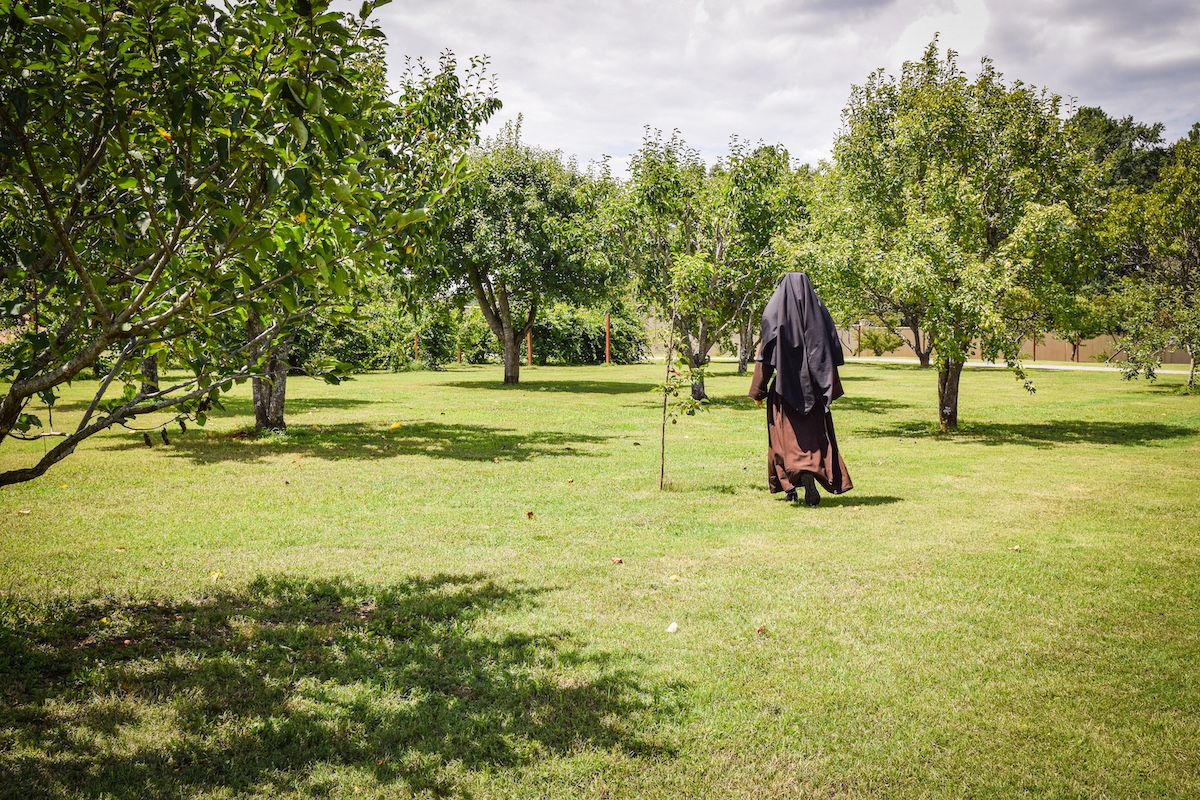
Silence and prayer are inseparable. By cultivating silence in the monastery and within the ‘interior cloister’ of the soul, one is free to speak always with Christ and to listen to Him. The cloister provides that ‘place apart’ where one can seek the face of Christ and learn from Him. Without the surfeit of distractions the world offers, the contemplative also comes to a deeper understanding of oneself, and experiences the need for conversion in order to grow closer to the Lord. Like Mary, who pondered the word of God in her heart, the nun finds her place in the heart of the Church in silent contemplation of the Word. Pope Benedict XVI wrote that “Silent contemplation immerses us in the source of that Love who directs us towards our neighbors so that we may feel their suffering and offer them the light of Christ, His message of life and His saving gift of the fullness of love.”
“Contemplative silence is a silence of adoration and listening by a person who stands in the presence of God. To stand silently in God’s presence is to pray. Prayer demands that we successfully keep quiet so as to hear and listen to God. Silence requires absolute availability with respect to God’s will. Man must be completely turned toward God and toward his brethren. Silence is a quest and a form of charity, in which God’s eyes become our eyes and God’s heart is grafted onto our heart. We cannot stay in the presence of the fire of divine silence without being burned. The friends and the lovers of God are irradiated by him. The more they remain in silence, the more they love God. The more empty of self they are, the more full of God they are. The more they converse with God, face to face, the more their faces beam with the light and splendor of God, like Moses coming out of the meeting tent” (Ex 34:29-35).
Robert Cardinal Sarah
Scripture
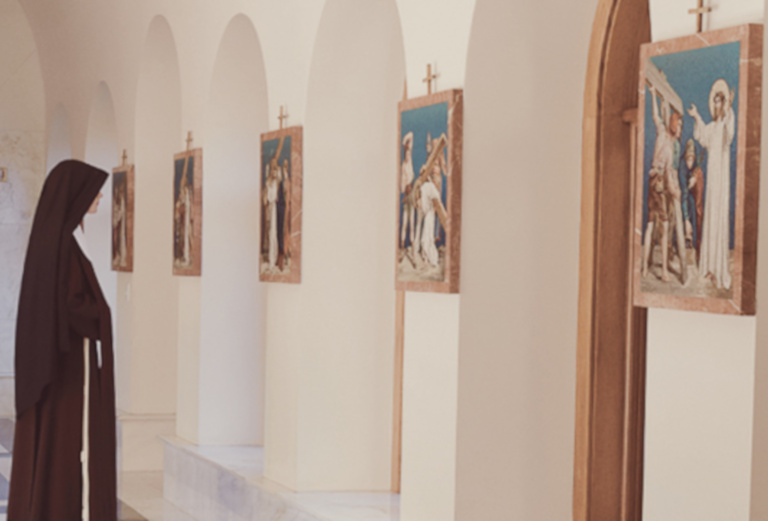
Of all the spiritual reading available, Sacred Scripture remains the chief ‘food’ for the Franciscan life of prayer. As our Holy Father Saint Francis received the call to follow Christ through the Gospels, so too, we seek to encounter the Living God through meditating daily on His Word. Our Holy Mother Clare in her rule gives us our form of life: “The form of life of the Poor Sisters which the Blessed Francis established, is this: to observe the Holy Gospel of our Lord Jesus Christ…”
FRATERNAL LIFE
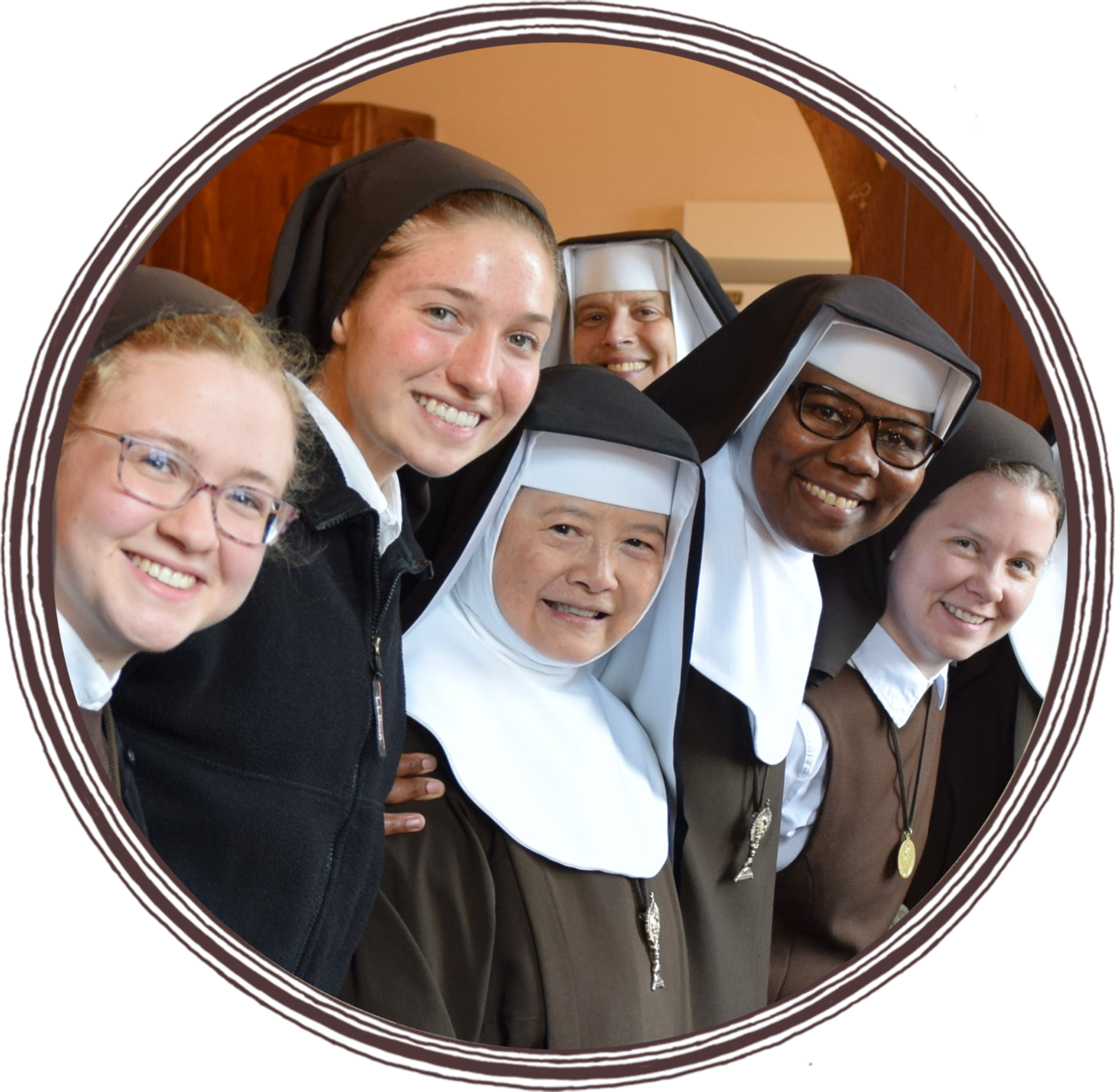
"Loving one another with the charity of Christ, let the love you have in your hearts be shown outwardly in your deeds so that, compelled by such an example, the sisters may always grow in love of God and in charity for one another."
The Testament of Saint Clare
"Drawn together by our mutual love for the Lord and continually renewed by it, we support one another in our fidelity to Christ. As we manifest His understanding, compassion, and care through the warmth of our holy love and acceptance, an atmosphere is created in which we can be sensitive to all that is good and beautiful, and encouraged in the cultivation of our womanly gifts."
PCPA Constitutions, 72
“A monastic community becomes a heaven not because its theory and structures are correct and its personnel are perfect, but because it is a zone of mercy.…In such a culture, perceived imperfections are not denied or papered over but are reframed by reference to a God who forgives and draws all into reconciliation.”
Michael Casey, OCSO
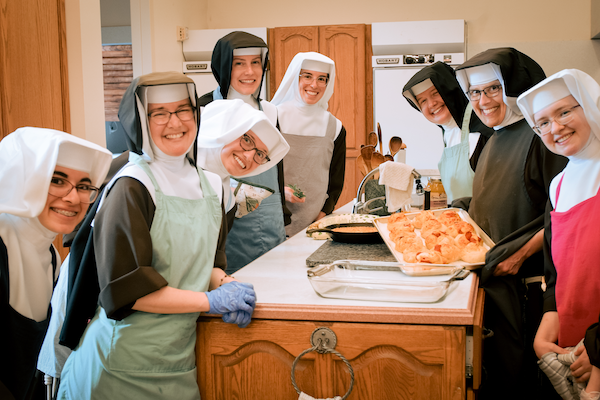
A vibrant communal life is a fruit of the Holy Spirit’s action which engenders our growth in holiness. Called here by the Lord to live in His Presence, we support our fellow Sisters through prayer and service in sisterly affection. Scripture assures us that we are given the opportunity to love Christ Himself in our Sisters. Seeking always to grow in love of God, the Holy Spirit guides us in living the great commandments – love of God and neighbor - thus enabling us to fulfill the mission given to St. Francis to build up the Body of Christ, the Church.
Seeing our fellow Sisters’ personal growth is an encouragement to each member of the community in faithfully living our call. Thus, life together becomes a small taste of the joy of the heavenly Jerusalem where we all will share in the fullness of God’s Own Life.
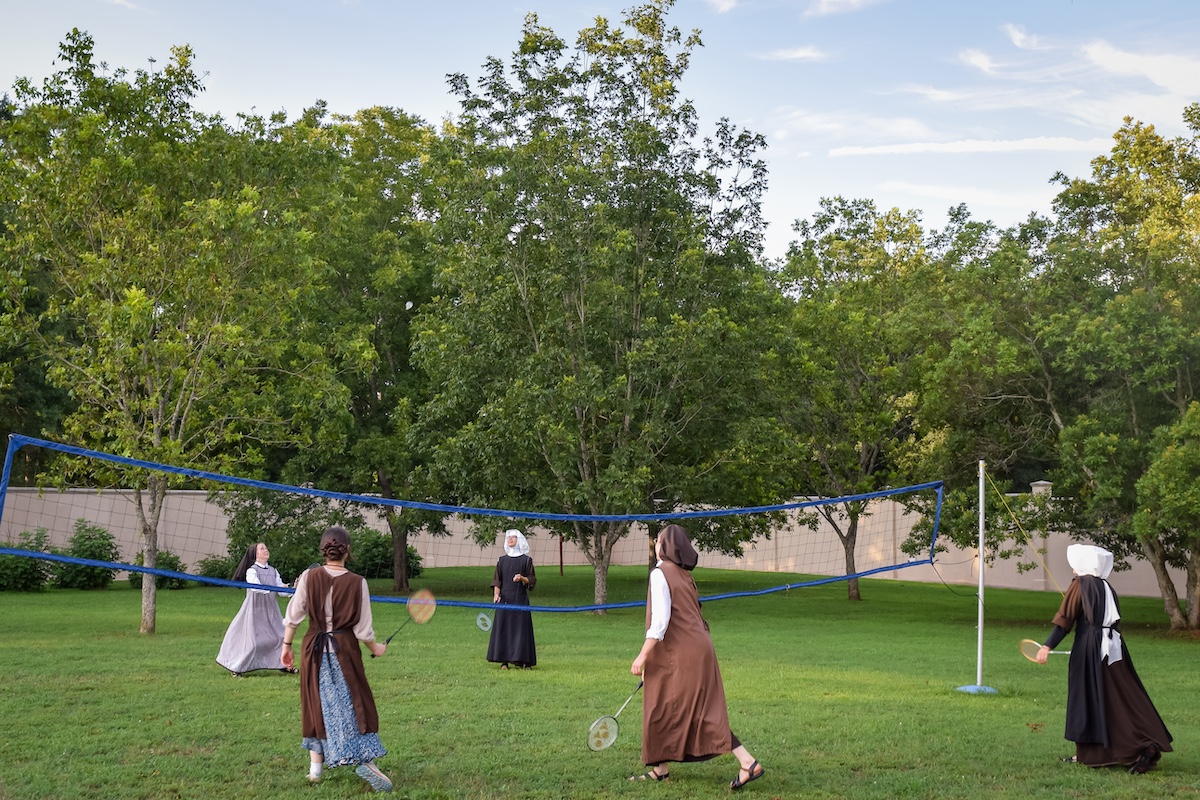
Daily recreation is an important time as we talk and laugh together, building friendships and sharing interests. On Sundays and Solemnities we have extra hours of recreation where we play games or have extended time to talk together. During the Octaves of Christmas and Easter, we recreate at meals and enjoy the festivities of the season together.
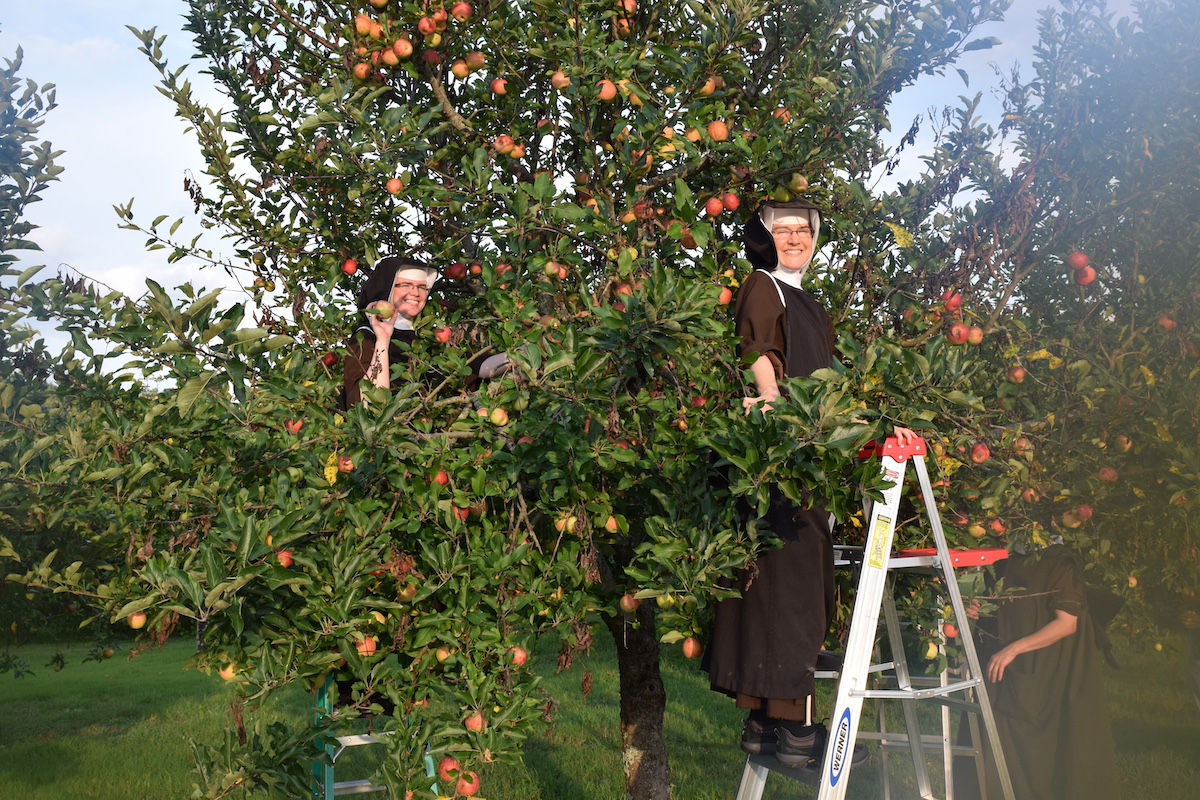
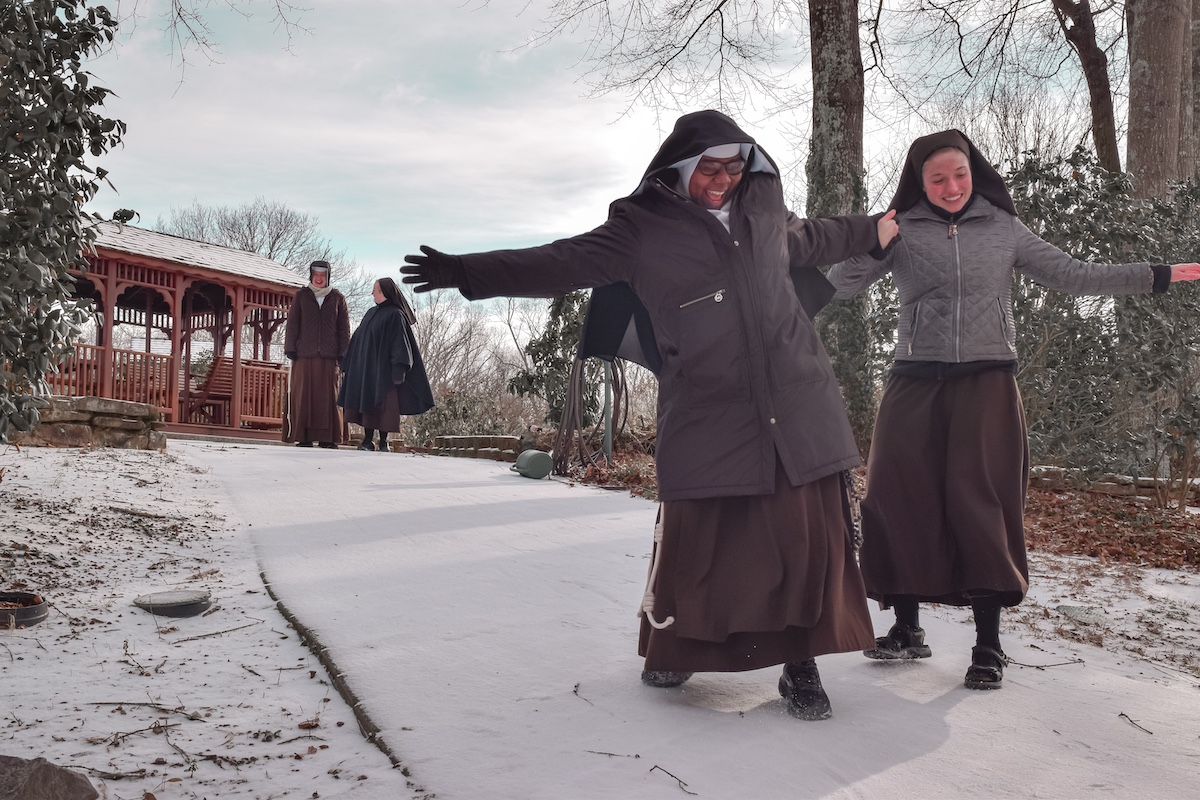
“Because of the mutual love involved, fraternal life is a God-filled space in which the mystical presence of the Risen Lord is experienced: in a spirit of communion, nuns share the grace of the same vocation with the members of their own community, helping one another to follow the same path, advancing together towards the Lord, one in heart and soul.”
Verbi Sponsa

OUR WORK
“Let the sisters to whom the Lord has given the grace of working work faithfully and devotedly… at work that pertains to a virtuous life and the common good… in such a way that... they do not extinguish the Spirit of holy prayer and devotion to which other temporal things must contribute.”
Rule of St. Clare, 7
“Our Divine Master does not need our deeds—except as a manifestation of our devotion. He thirsts only for our love. Without that, nothing else we give has any value in His eyes.”
Mother Catherine Thomas, DC
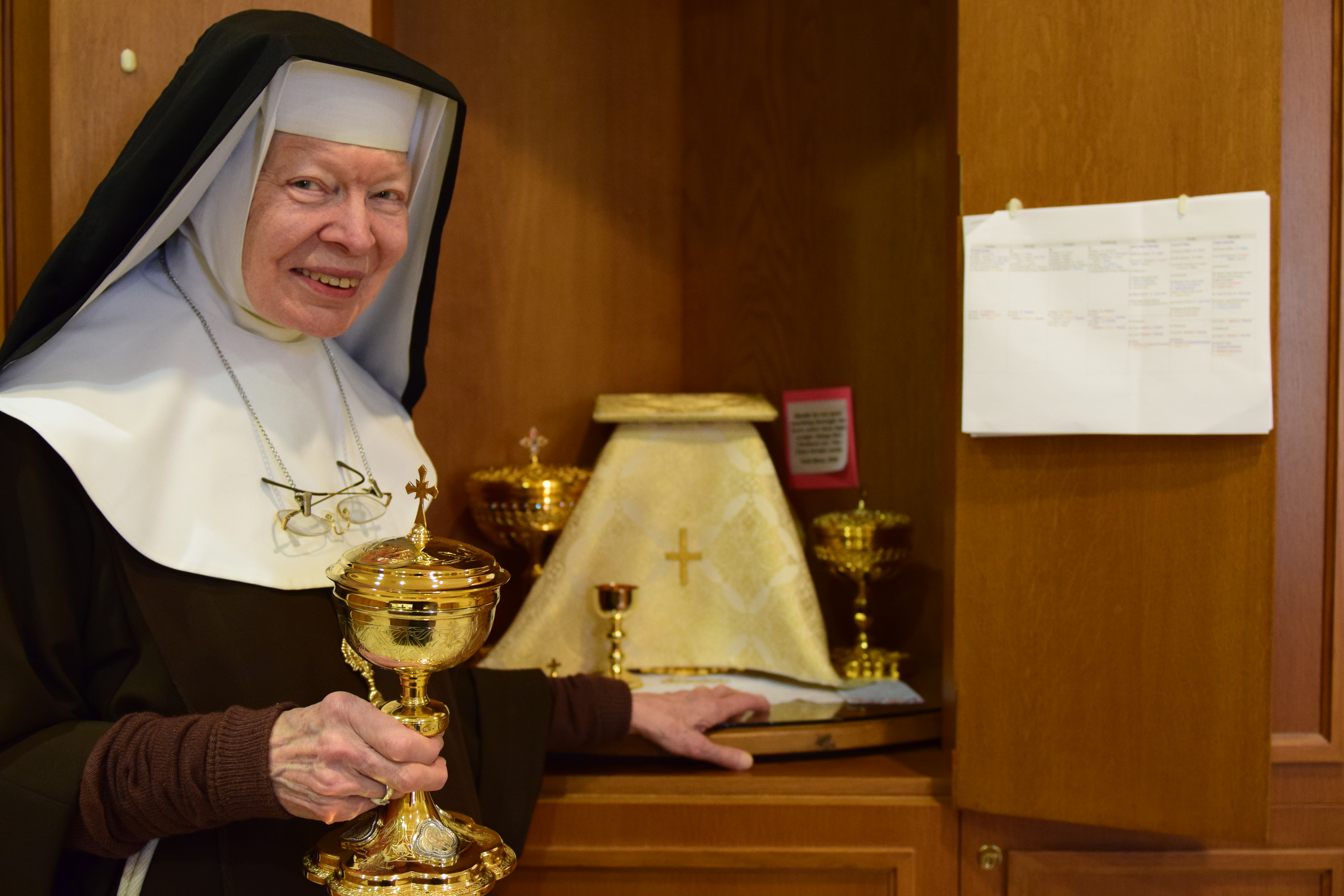
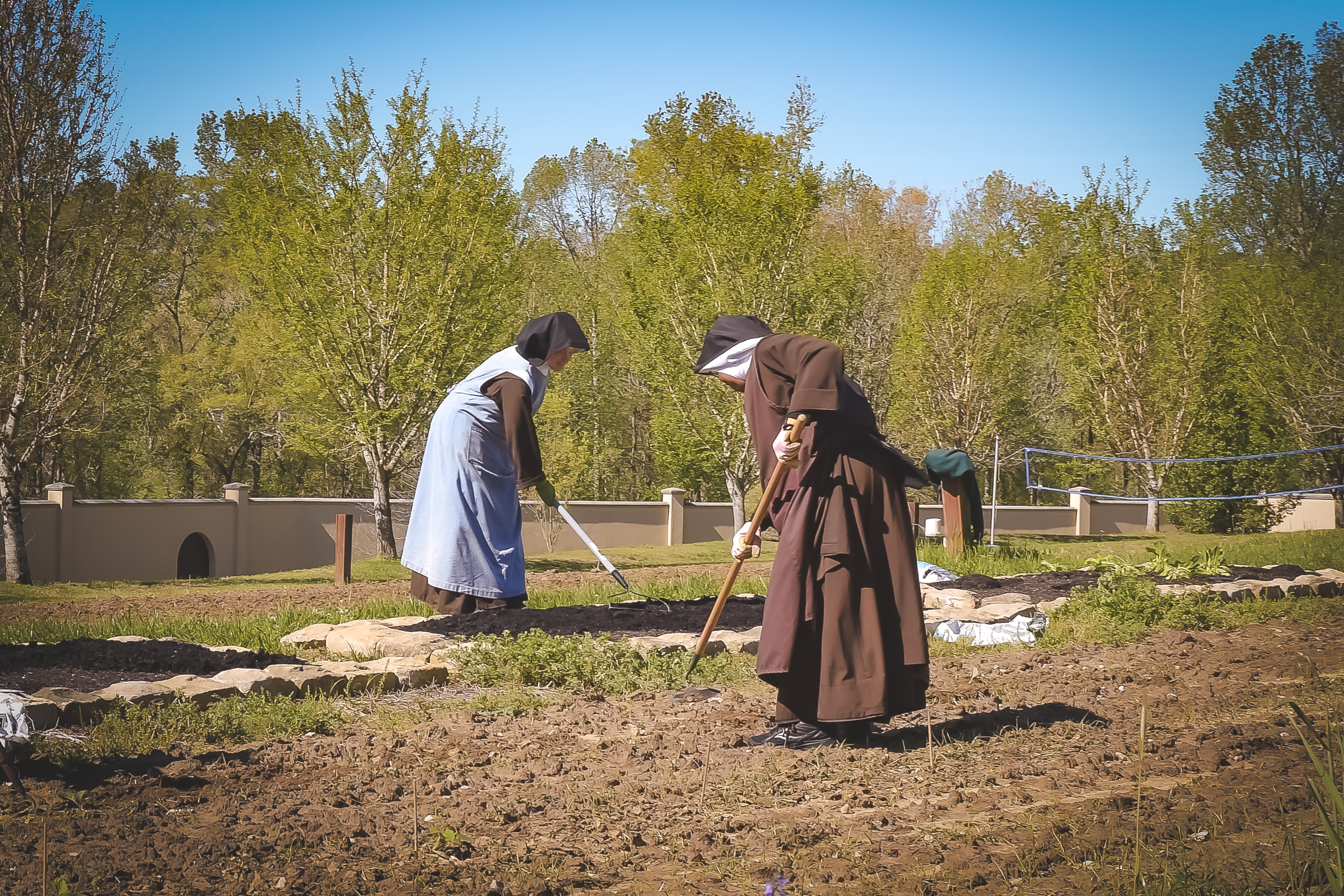
Holy Mother St. Clare refers to ‘the grace of working’ as a gift from God. Christ Himself went about doing the work of the Father at Nazareth, in His Public Life, and in His Redeeming Work of the Passion. In our work we seek to imitate the Poor Christ, sharing in His Poverty and offering all our labors in union with His.
Labor done “faithfully and devotedly” flows from prayer and leads to prayer. Just as our communal prayer seeks to join the voice, the heart and the mind in harmony with God, so too working joins our hands and minds to the Mind and Will of God. Thus the goals of Franciscan monastic work and the spirit of prayer are the same.
We seek through our labor to grow in union with our Suffering Redeemer, in charity with our Sisters, and to grow in personal maturity and Christian character.
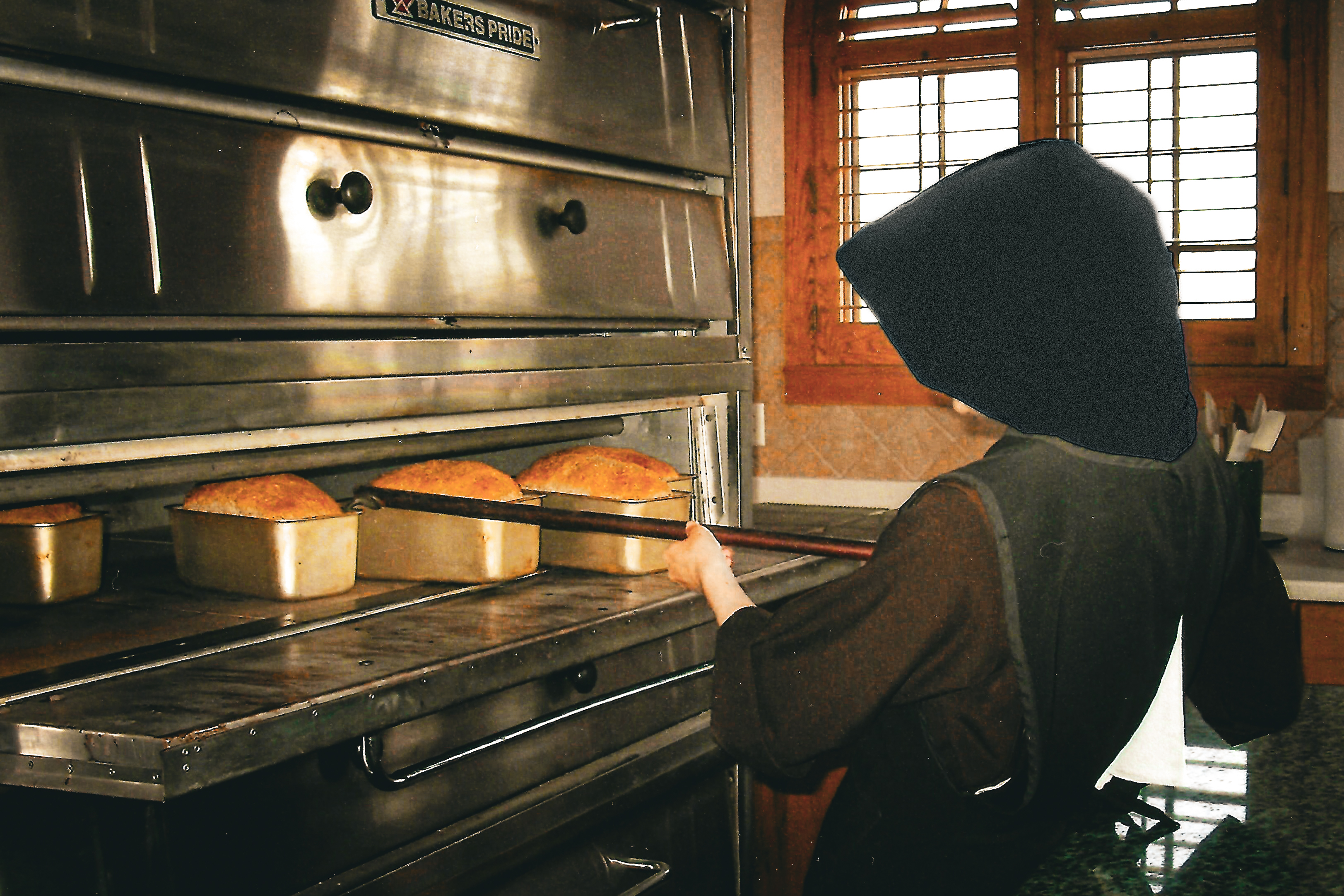
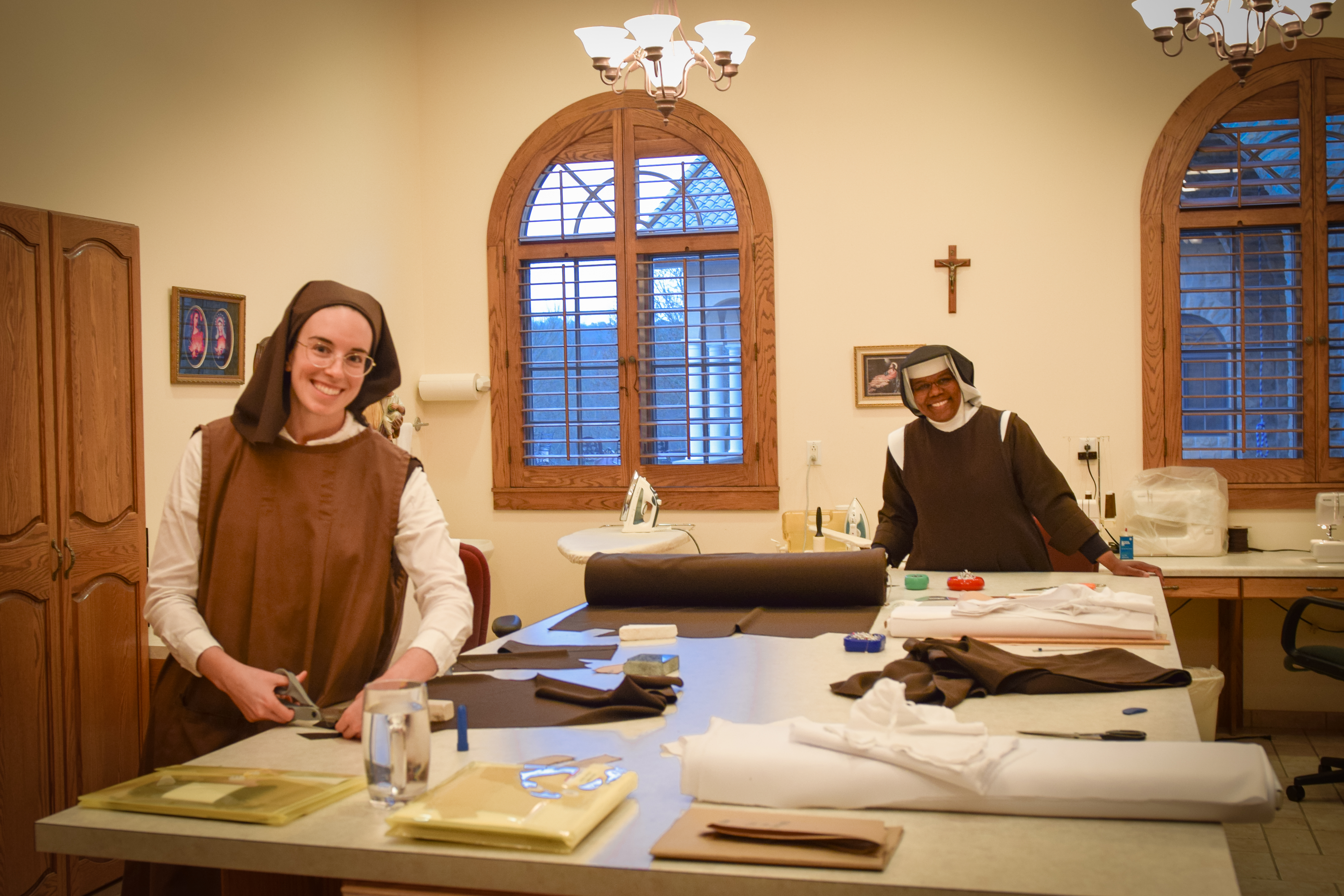
Through daily work, each nun finds a steady means to grow in charity by serving the needs of her sisters in imitation of Christ who “came to serve” (cf. Mt 20:28; Mk 10:45). Our assigned tasks allow us to contribute to the life of the community while providing opportunities for personal growth. Whether the work is done with other sisters or individually, the nun finds that: “By enduring the toil of work in union with Christ crucified for us, man in a way collaborates with the Son of God for the redemption of humanity. He shows himself a true disciple of Christ by carrying the cross in his turn every day in the activity that he is called upon to perform” (Pope St. John Paul II)
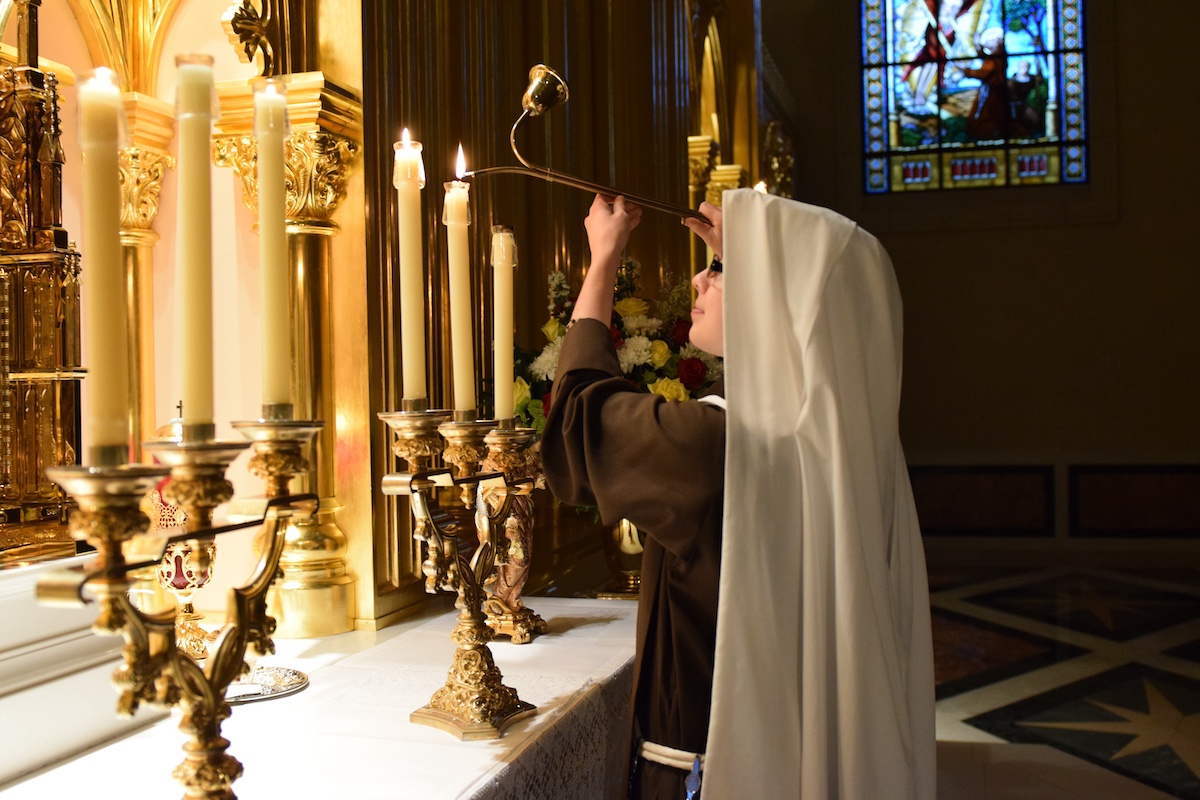
Each Sister contributes to the cleaning of the monastery and is given various responsibilities to fulfill. Some of the monastery jobs include cooking, sewing, sacristy work, mail correspondence, baking, portress, gardening and care of the infirm. All of this serves to support the main ‘work’ of prayer and adoration even as we seek to “keep the Lord ever before [us],” (cf. Ps 16:8) offering our labors in union with Christ.
