F o r m a t i o n
"Religious formation fosters growth in our life of consecration from its beginnings to its final consummation when we meet the Lord in death. For us this formation is a lifelong process of becoming transformed into Christ in our Franciscan way of Gospel living. This requires a continual conversion which leads to the maturing of our whole person throughout both the initial and ongoing stages of our development."
PCPA Constitutions, 176
"All formation is first of all the work of God Himself acting within us through the Holy Spirit of Jesus. Cooperating with His grace and guidance, we accept in love our responsibility in our own formation. Our human and spiritual development is not only a personal good but also becomes a blessing to our community and a source of fruitfulness in the Church."
PCPA Constitutions, 177
The Six Stages to Becoming a P.C.P.A.

Stage 1: Initial Visit
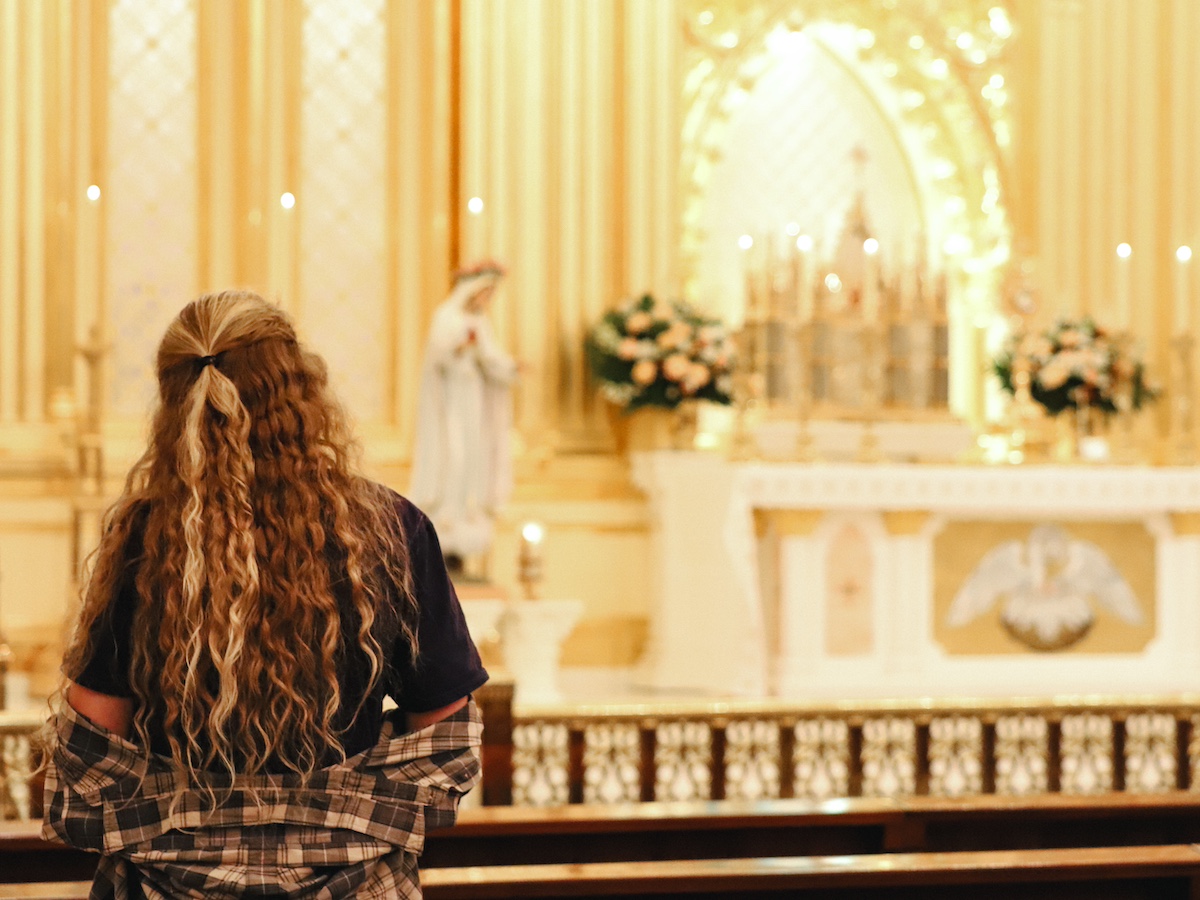
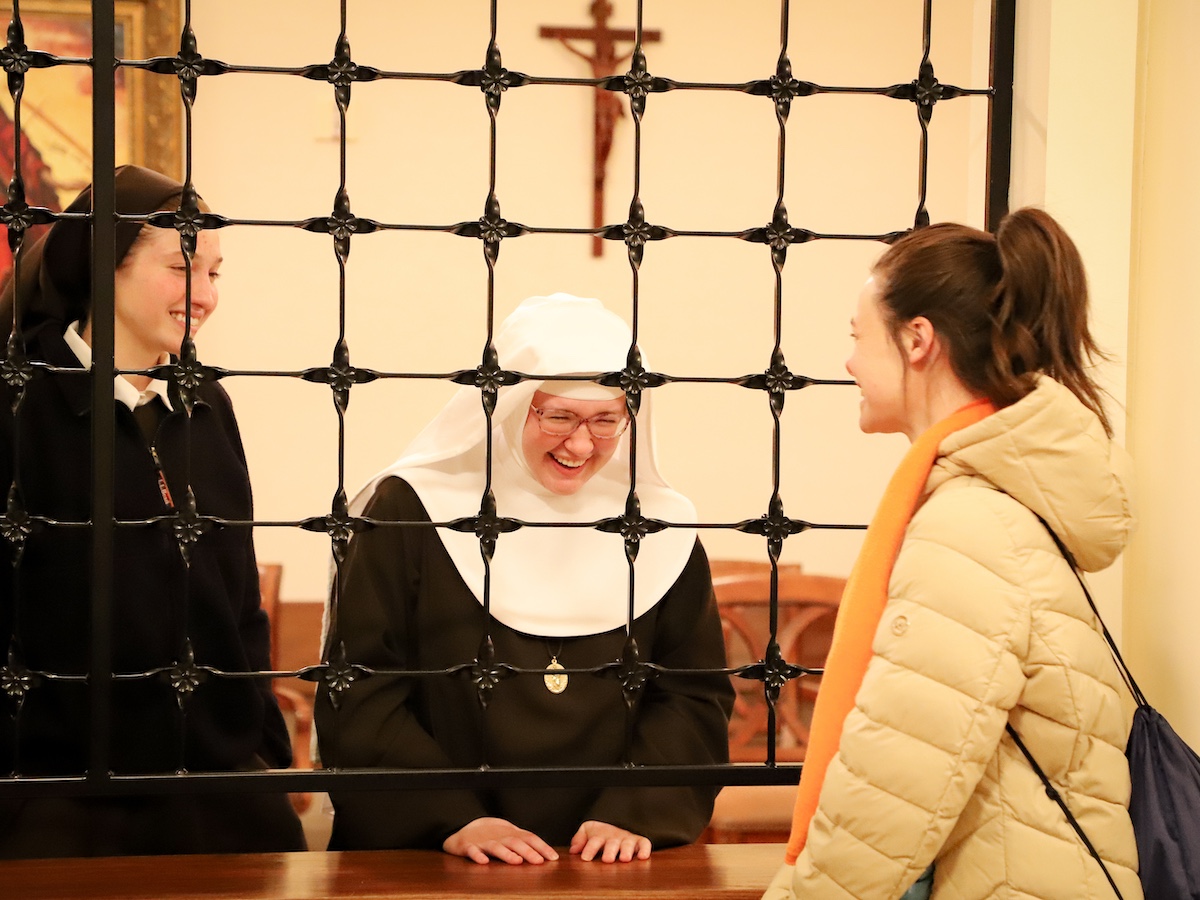
A young woman’s discernment with the community begins with a week-long visit. She spends this time living the monastic horarium of the nuns, spending time with Our Lord in adoration and shares recreation with the novitiate. During her stay, the young woman stays in the monastery hall which is outside the Enclosure, and takes part in the morning Mass and the Liturgy of the Hours in the Main Chapel.
The extended experience of silence and formal spiritual direction are integral to this time of discernment. If the time during the initial visit leads the young woman and the formation directors to believe that she has a potential call to this community, she is then admitted to aspirancy.
Stage 2: Aspirancy
A new candidate to the monastery joins in the life of the community, praying, working, taking meals and recreating with the nuns. She takes part in the Novitiate Lessons and Study Period during the week. The immersion into the rhythm of the Divine Office, adoration hour, monastic work, the experience of the enclosure and times of fun give the candidate the opportunity to assess both her call to contemplative life and to our particular community. The candidacy also gives the community the chance to become acquainted with this budding vocation and to help her along her first steps to religious life.
Stage 3: Postulancy
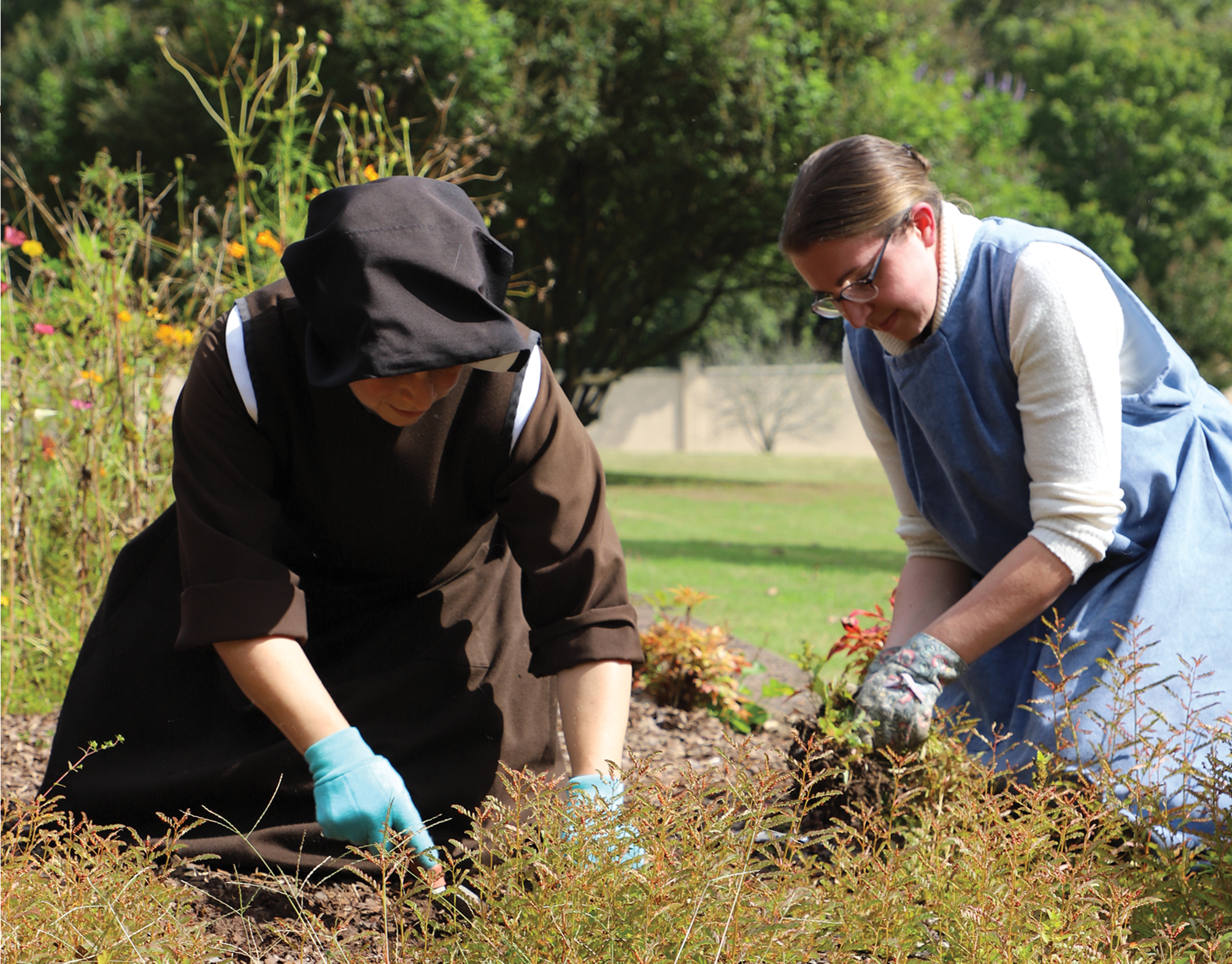
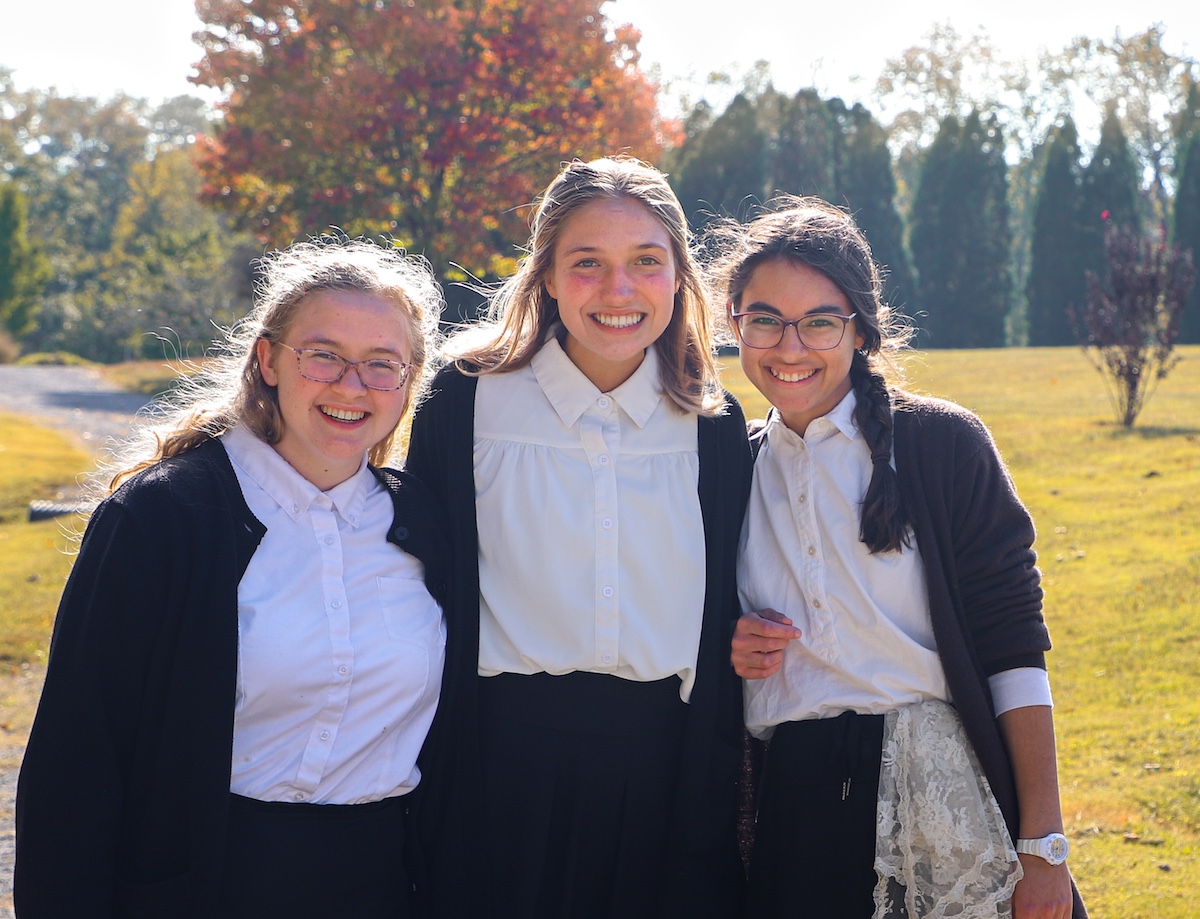
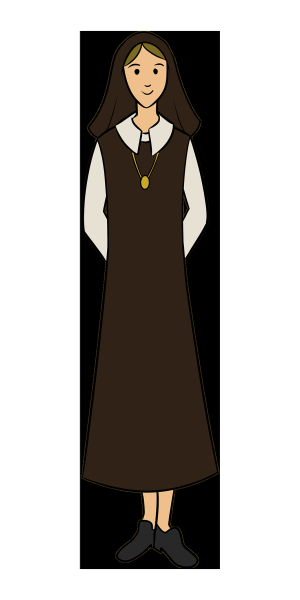
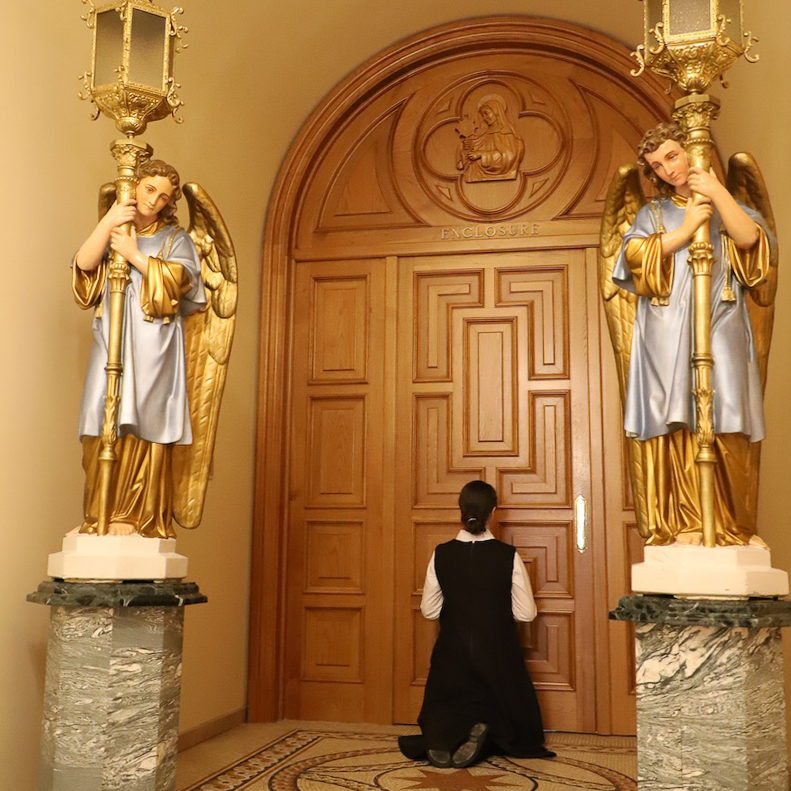
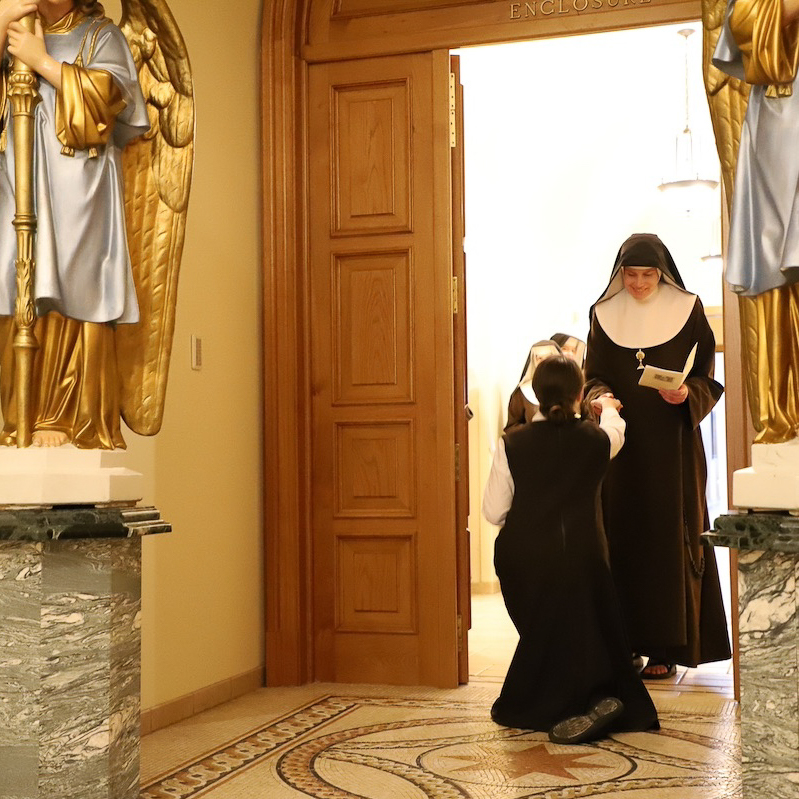
A young woman entering the cloister begins her journey by kneeling and knocking at the Enclosure door. The abbess then opens this door, which can only be opened from within, and asks her what she desires. She states that she desires to begin the time of discernment, of listening to the voice of God as He speaks in and through the community, that she may prepare her soul for the great day of union between bride and Bridegroom. To this the abbess replies in the words of Scripture, “enter into the joy of the Lord.” The community then leads the young woman to the Chapel in procession while chanting the Order’s refrain: Adoremus in Aeternum Sanctissimum Sacramentum. There she receives the brown postulant veil, the medallion worn by PCPA novitiate Sisters, and is greeted as the newest “Sister!” From this point on, she shares in the life of the nuns, becoming acquainted with the ways and customs of our monastic life. She studies Scripture and delves into Church documents as well as the foundations of the spiritual life. If she completes this first year and believes that she has a vocation to this way of life, she may ask to be admitted to the novitiate.
Stage 4: Novitiate
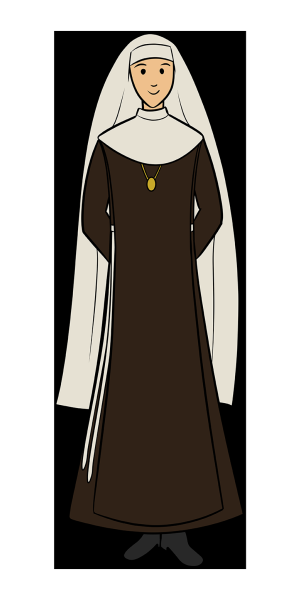
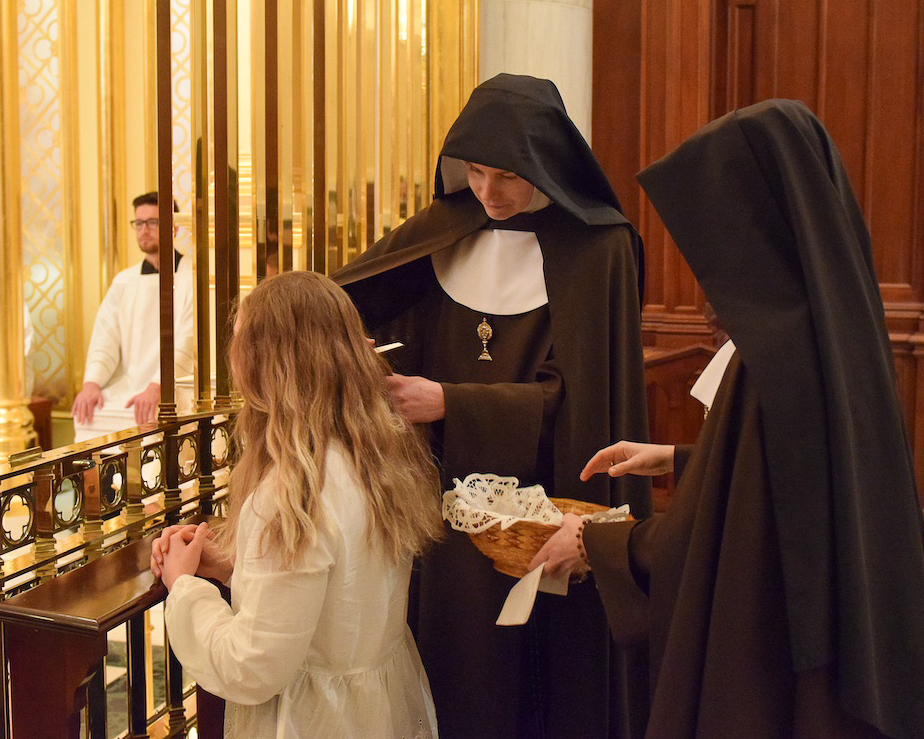
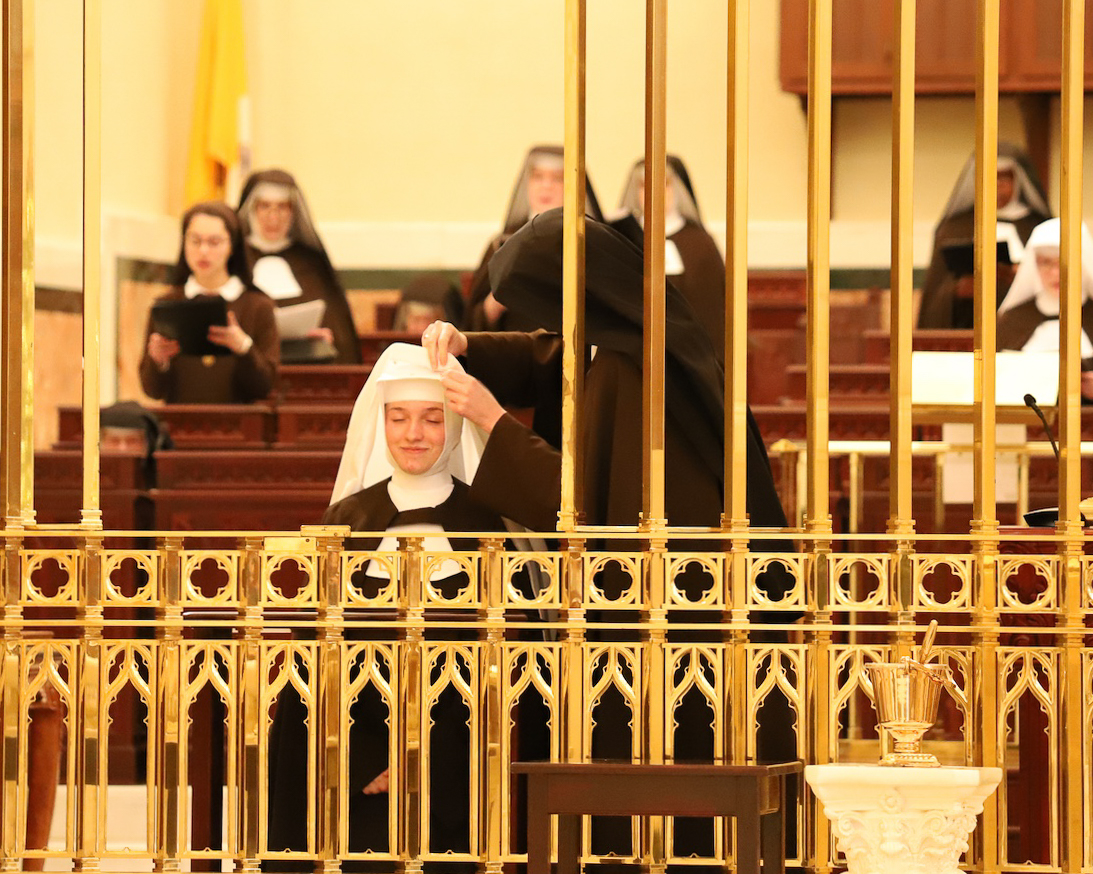
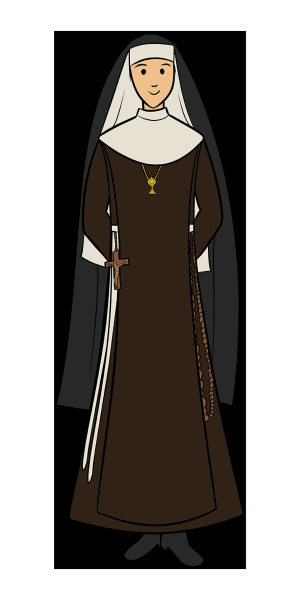
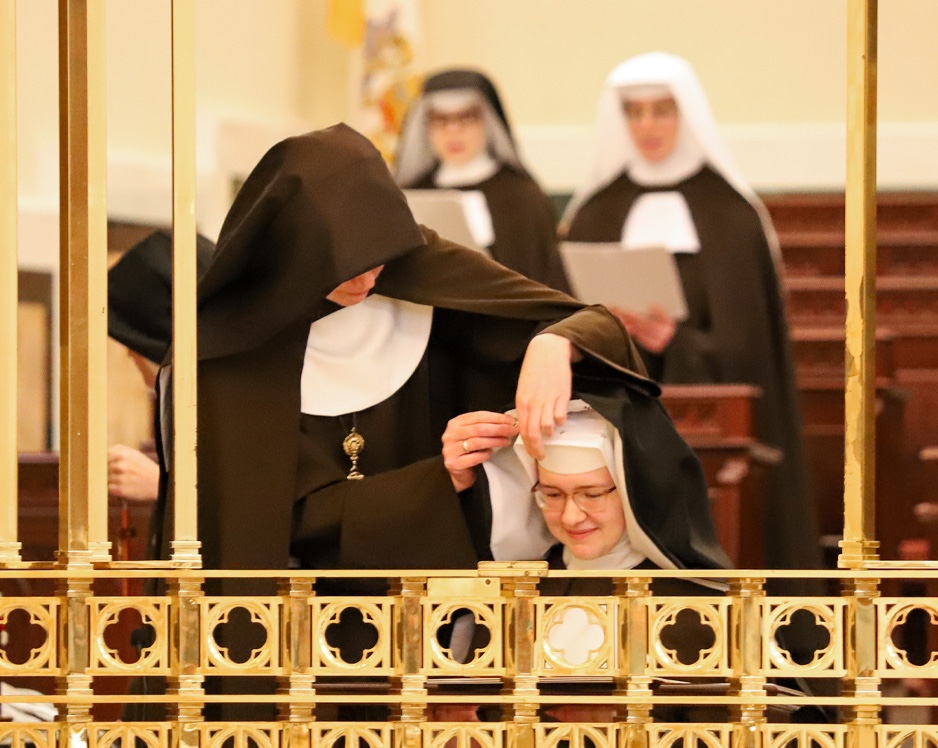
After a year of postulancy, the entrance into the novitiate marks the radical beginning of the nun’s religious life, and her desire to exchange the “things of time for those of eternity” (St. Clare). The clothing ceremony, which takes place after Mass, presents a thrilling transformation as the postulant garb is exchanged for the religious habit, symbolic of her being clothed with Christ. First however, her hair is shorn, as was our Holy Mother Clare’s, to show her renouncement of the things of the world. She kisses each article of the habit as she receives them. Each piece has significance. After being clothed, she is given the white veil, symbolic of her call to be a pure spouse of Christ. She is then given her new religious name and title! The novitiate lasts for two years, the second being a canonical year which is a more rigorous time of enclosure (less contacts with family and friends) where she is able to test her vocation. During this time she has the guidance of the Novice Mistress and is given instruction in preparation for the profession of vows.
Stage 5: Junior Professed
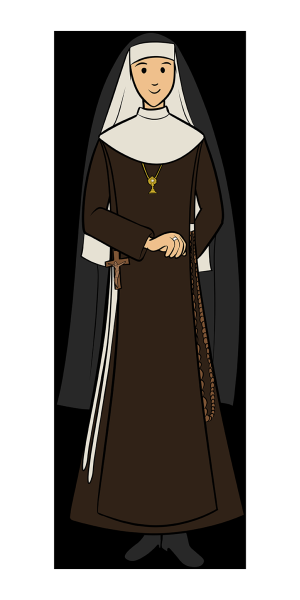
After the nun’s novitiate, she may be accepted to make her first profession of vows. She professes the vows of poverty, chastity and obedience, as well as the observance of the Enclosure for one year, committing herself to the praise of God through Perpetual Adoration and the praying of the Liturgy of the Hours. This initial consecration is also integration into the community as she receives the Constitutions of the Order and is exhorted to live what she has learned during her novitiate. At the profession ceremony she exchanges the white veil for the black, symbolic of having died with Christ through her profession and living in Him. She also receives a profession crucifix to be worn on her cord. The joy of belonging to Christ more fully through the vows is then allowed to deepen and mature as she comes to experience more fully the challenges of living a radical life according to the Gospel. Simple vows are renewed each year for six years as the nun approaches solemn profession.
Stage 6: Solemn Professed
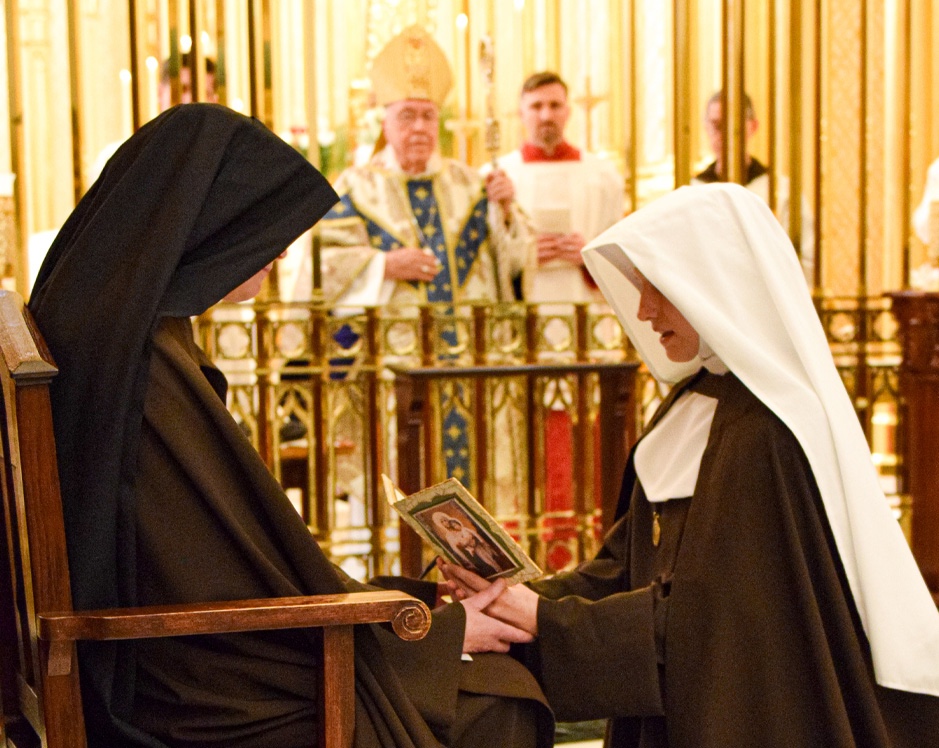
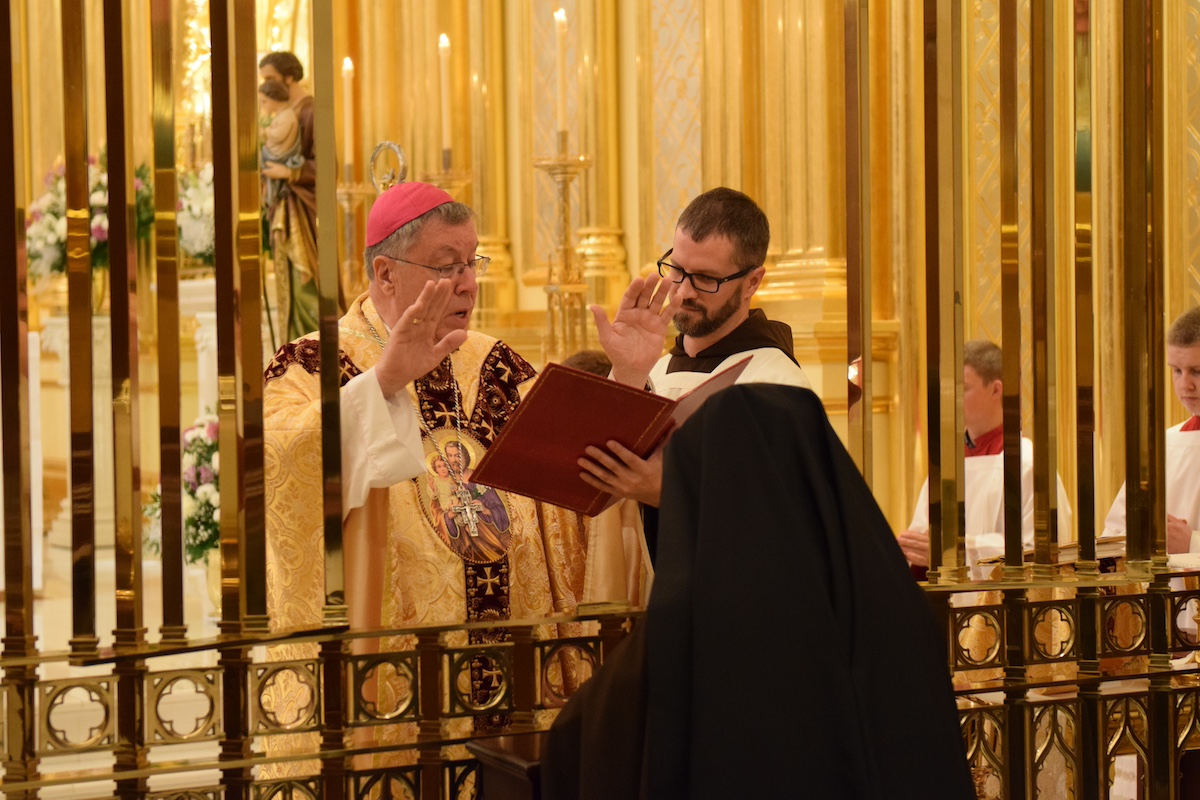
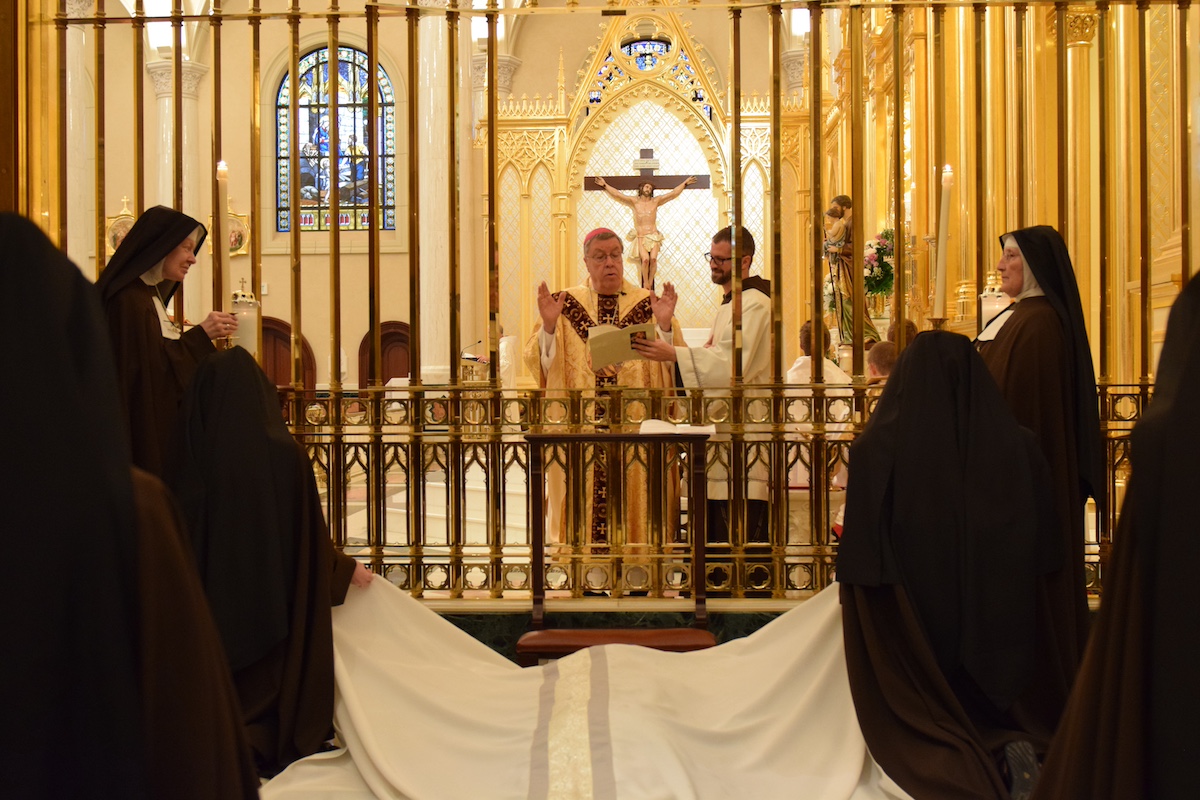
After renewing simple vows for six years, the nun asks for the grace to be admitted to solemn profession. During this rite of the Church, the Sister petitions to be received by the Church and to be allowed to dedicate her entire life to prayer and the service of God’s People through the living of the Gospel’s evangelical counsels. She prostrates beneath a funeral pall during the Litany of the Saints – dying to the world and to herself so as to live for the rest of her life in and for Christ. She then vows to live her entire life in obedience, without property, and in chastity. Following her definitive promise, the Church in the person of the Bishop or celebrant, receives her and consecrates her to God through a solemn blessing. She is then given a wedding ring, the sign of her marriage with Christ the Bridegroom. From then on, she is commissioned to pray the Liturgy of the Hours on behalf of God’s People and to devote herself to Perpetual Adoration, sacrifice and prayer for the world. Thus begins the life of a PCPA, which continues to grow through conversion into union with Christ until the last day of her earthly life where she meets her Spouse face to Face!
“Have full, grateful knowledge of your vocation!”
Testament of our Holy Mother St. Clare
“I am filled with joy and I just breathe with exultation in the Lord because I come to know for certain that your following in the footsteps of the poor and humble Jesus Christ Who supplies most wondrously for what is lacking in me and the rest of the Sisters here in their efforts to imitate you.”
A letter to Saint Agnes from our Holy Mother St. Clare